


Walking up the stairs to Lift Next Level Floats in Brooklyn, I could already feel my nervous system negotiating with me.

Do we really have time for this?
What about emails?
What if I can’t turn my brain off?
As a therapist, health and wellness coach, I spend my days helping clients downshift from chronic stress, anxiety, and burnout. I talk about nervous system regulation constantly. But that day, I wasn’t the therapist or the coach.
I was the one who needed a reset. 🙂
Stepping Out of the City… Without Leaving
The moment I stepped into Lift, it felt like the city stayed downstairs. The space was quiet, warm, and intentionally simple. Soft lighting. Calm voices. No rushing.
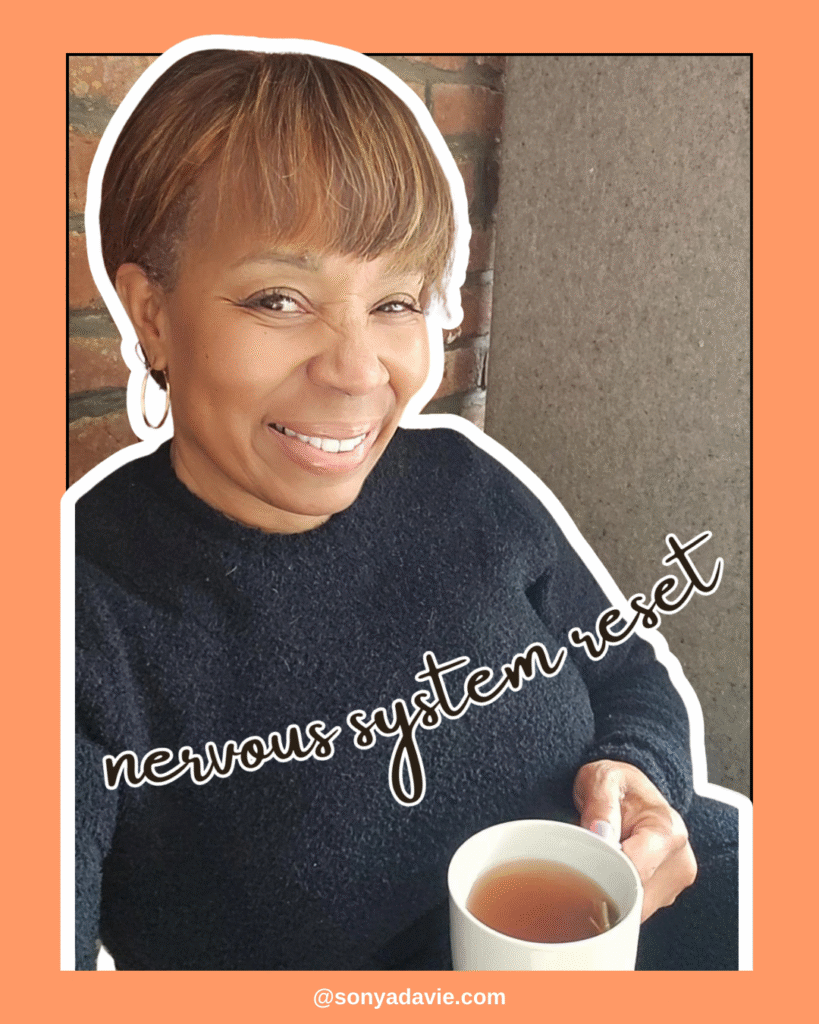
The staff gently walked me through each step: showering first, how to use the earplugs, where the towels were, how to adjust the lights and music, and what sensations to expect once I was inside the tank.
And honestly, that orientation matters more than people realize.
From a mental health perspective, predictability and a sense of control are huge for anxious brains. When your brain knows what’s coming, it doesn’t have to stay on high alert scanning for surprises.
So, by the time I opened the tank door, I could already feel my shoulders drop.
Entering the Float: Meeting My Own Mind
The tank felt like a futuristic pod filled with warm, salty water that made it impossible to sink.
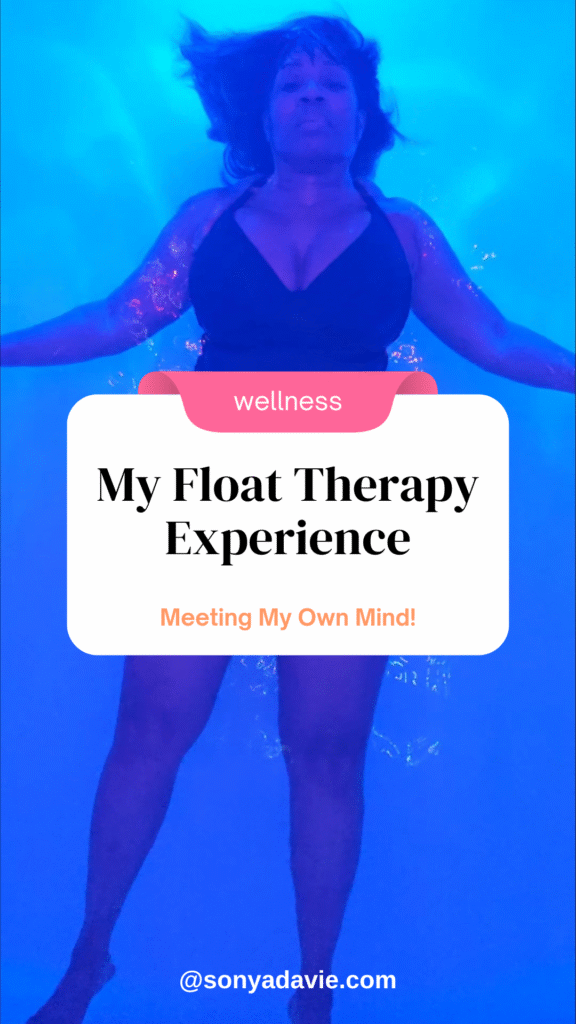
Once I settled in, the water matched my skin temperature so closely that I lost track of where my body ended, and the water began.
Lying back, I felt my body rise effortlessly. My spine lengthened, joints decompressed, and I became acutely aware of how much tension I had been holding in my shoulders and jaw.
This is one of the first gifts of floating: you can finally feel what your body has been carrying.
The first 10–15 minutes? My mind did exactly what my clients describe:
- Ran through my to-do list
- Replayed conversations
- Wondered if I was “doing it right”
Floating isn’t about instant peace. It’s about creating the conditions for your nervous system to remember how to soften.
As external stimulation dropped — no phone, no emails, no subway noise: my internal world got louder for a moment. Then, slowly, it quieted.
My breathing deepened. My thoughts softened. Time got fuzzy in that “good nap” kind of way. But what stood out most was the feeling of being held without effort.

For many of the women, caregivers, and high-achieving professionals I work with, that alone is therapeutic.
But you know… as much as I loved the experience, I also care a lot about the science. So I’m excited to share why it felt like this for a reason.
What the Research Says About Float Therapy
Floatation-REST (Restricted Environmental Stimulation Therapy) has been studied for stress, anxiety, depression, and pain. I’ve pulled together these most important findings:
#1 Floating lowers stress hormones.
Even a single session can reduce cortisol. Over time, it may help reset chronic stress levels.
#2 It supports anxiety relief.
People with high anxiety sensitivity often report less muscle tension, lower blood pressure, and sustained calm after floating.
#3 It can improve mood and sleep.
Series of float sessions has been linked to improved sleep quality and reduced depressive symptoms.
#4 It mimics deep meditative states.
Brainwave patterns during floats often resemble those of experienced meditators, linked to creativity, insight, and deep relaxation.
Is floating a replacement for therapy, medication, or trauma work? No.
But…
As an integrative mental health provider, I see it as a powerful adjunct. It creates a physiological state that makes healing work more accessible and sustainable.
Why Floating Helps a Stressed, Modern Nervous System
Most of us live in “sympathetic overdrive“! Our fight-or-flight system stays switched on far longer than it was designed to.
Email pings. Social media. Caregiving. Work demands. Microaggressions. City noise. Constant productivity. All these things keep our bodies braced for the next thing.

With floating, it gently guides the body into parasympathetic mode (our rest and digest mode) by:
- Reducing sensory input: no screens, noise, or visual scanning
- Removing gravity’s load: weightlessness decompresses joints and muscles
- Encouraging interoception: awareness of breath, heartbeat, tension, emotions
- Allowing safe stillness: private, controllable environment (lights, lid, exit anytime)
For nervous systems that have learned to survive by staying busy, hypervigilant, or overproductive, this kind of environment can begin to teach the body that it is safe enough to let go, even if only for an hour at a time.
Who Might Benefit Most?
While everyone is different and individual assessment is always important, here are some of the clients I most often think about when I’m in a float tank:
High-achieving professionals and entrepreneurs
People who are constantly “on,” juggling leadership, caregiving, and performance demands often have trouble truly resting. Floating can be a structured way to practice doing nothing while still “doing something” for their health.
People with chronic stress and anxiety
For those living with generalized anxiety, social anxiety, or chronic worry, floating can offer a safe place to experience deep relaxation and practice being with bodily sensations without judgment. It can be especially supportive when paired with therapy that teaches grounding and coping skills.
Trauma survivors (with support)
For trauma survivors, especially those with a history of feeling unsafe in their own bodies, floating can be powerful, but it must be approached thoughtfully. Having choice (lights on or off, lid open or closed), a clear exit, and a trauma-informed provider to process the experience with afterwards can make this a gentle, supportive tool rather than an overwhelming one.
People with sleep issues or burnout
When the body forgets how to downshift at night, float sessions can help retrain the nervous system to access deep relaxation again. Many people report their best sleep in weeks after a float.
Lastly, those with chronic pain or tension
The combination of weightlessness, muscle relaxation, and decreased stress can help reduce perceived pain and give the body a window of relief, which often improves mood and coping capacity.
Integrating Floating Into a Holistic Wellness Plan
As an integrative practitioner, I don’t see floating as a stand-alone fix but as one tool in a comprehensive wellness plan that might also include:
- Individual therapy or coaching to process emotions and patterns that surface during floats.
- Nutrition and gut-brain support to stabilize mood, energy, and inflammation.
- Nervous system regulation tools – breathwork, somatic exercises, gentle movement.
- Sleep hygiene practices to reinforce the relaxation signals your body receives in the tank.
My Post-Float Integration Moment
After my session at Lift, I intentionally took a few extra minutes in their lounge area before reentering the city. I drank water, noticed how my body felt, and jotted down a few words: “spacious, quiet, reset.”
That brief integration time turned the float from a nice experience into information I could actually use:
I realized how loud my inner world had been.
How unfamiliar deep physical rest felt.
How much I needed clearer boundaries between work and self.
Floating didn’t erase my stressors.
But it gave my brain and body a reference point for what calm actually feels like.
And that matters.
My Gentle Invitation
If you’re feeling stretched thin, anxious, or disconnected from your body, a float session at a high-quality center like Lift can be a powerful complement to therapy and daily nervous system practices.
Not as a luxury. But as a nervous system intervention





+ show Comments
- Hide Comments
add a comment