


By Sonya Davie, LMHC, INHC, CMHIMP — from an integrative & functional psychiatry–informed perspective
Originally published October 1, 2025 · Updated October 7, 2026
Depression isn’t just a personal struggle. It’s a global health challenge that touches nearly every family, community, and workplace.
And this October, I want to look at it from an integrative & functional psychiatry–informed perspective, because the research has moved a lot in the past year.
Let’s start with the numbers.
The Numbers Keep Climbing
- 322 million people worldwide are living with depression, according to the World Health Organization’s latest estimates.
- In the U.S., depression prevalence rose about 60% in a single decade, per the CDC’s most recent national survey data.
- In 2023, more than 1 in 10 U.S. adults (11.4%) took prescription medication for depression. Women (15.3%) were more than twice as likely as men (7.4%).
- Even in wealthy countries, only about one in three people with depression receives mental health treatment at all.
So here’s the question I keep coming back to:
If prescriptions are this common, why are the numbers still going up?
The Serotonin Story Is More Complicated Than We Were Told
Since the late 1980s, the “chemical imbalance” idea, that depression is caused by low serotonin, has been the go-to explanation in ads, waiting rooms, and doctor’s offices.
In 2022, a widely discussed umbrella review (a “study of studies” that pulls together many existing reviews) looked at 17 major analyses and concluded there was no consistent evidence that depression is caused by low serotonin levels or activity.
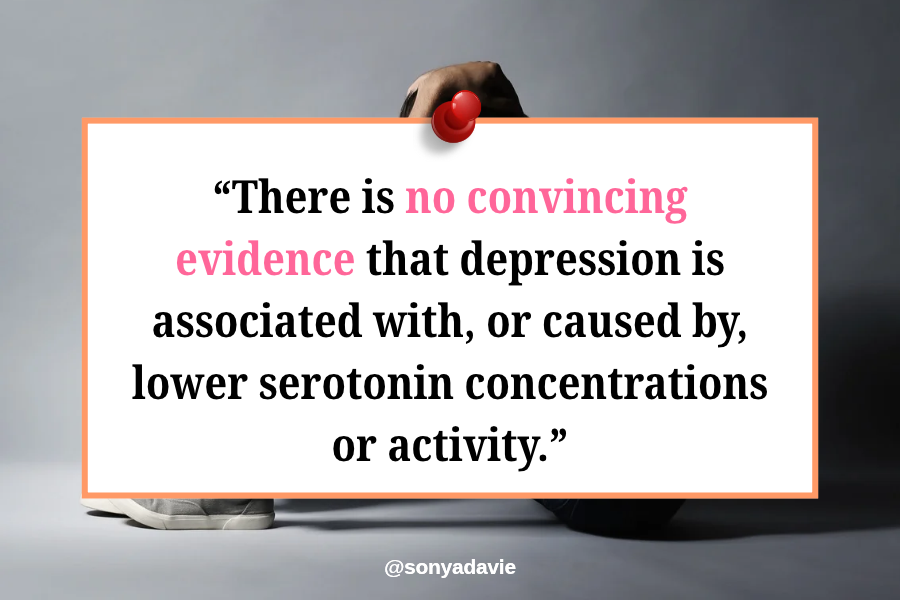
To be fair, that review sparked real debate.
Other researchers challenged its methods, and the authors themselves clarified that their findings don’t mean antidepressants never help. But nearly everyone now agrees on one thing: “low serotonin” was always too simple an answer. Depression has many roads in.
So… what else might be going on?
Screening Is Step One, Not the Whole Story
Every October, National Depression and Mental Health Screening Month reminds us to check in, get screened, and connect people with support.
Screenings matter. They catch signs that might otherwise slip by.

But most screenings, like the PHQ-9 (a nine-question checklist that scores how often you’ve felt depressed symptoms over two weeks), tell us how you feel. They don’t tell us why.
A questionnaire won’t show a vitamin deficiency. It won’t show blood sugar problems. It won’t show what you’ve been eating for the past five years. That’s where a whole-person lens comes in.
Food Is Information for Your Brain
What you eat, and what your body actually absorbs, shapes your brain chemistry, your energy, your focus, and your mood.
The landmark SMILES Trial (2017) was one of the first randomized trials to test this directly.
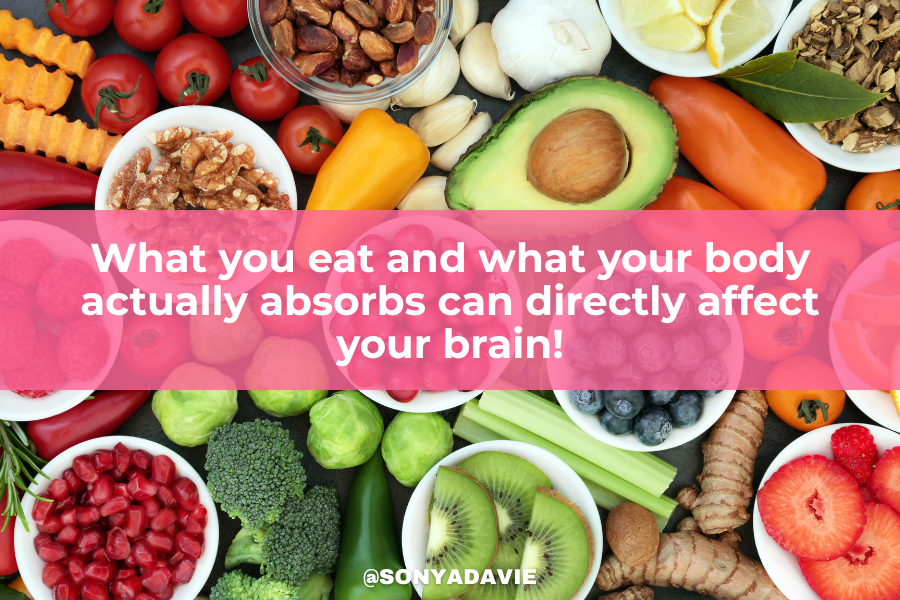
- Adults with moderate to severe depression who received dietary coaching toward whole foods, vegetables, legumes, healthy fats, and lean proteins improved significantly more than a comparison group that received social support alone.
- About a third of the diet group reached remission (meaning their symptoms dropped below the clinical threshold for depression), compared to fewer than 1 in 10 in the comparison group.
It was a small study, but it opened the door to an entire field now called nutritional psychiatry.
New Research: Ultra-Processed Foods and Your Mood
Ultra-processed foods are industrially made products built from refined ingredients, additives, and flavor enhancers!
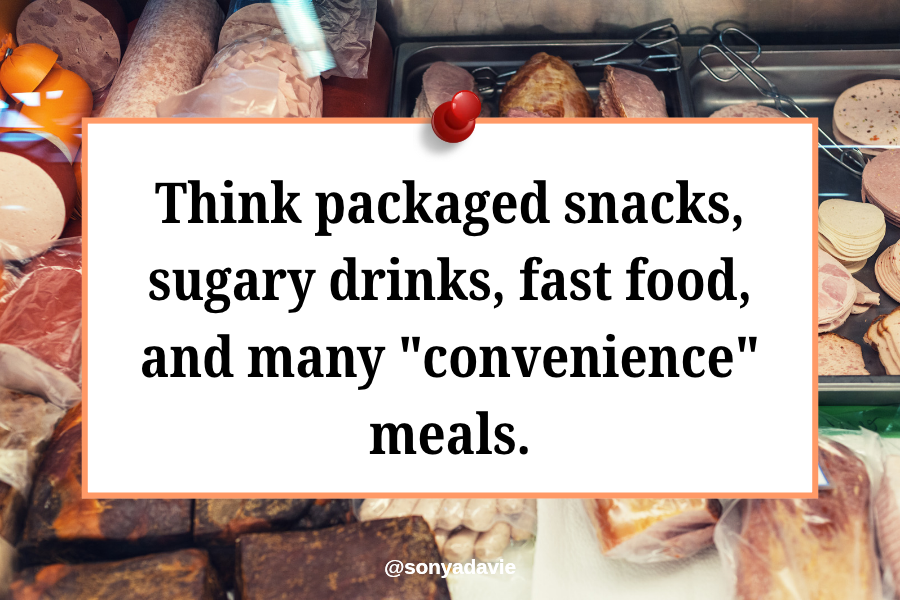
The evidence linking them to depression keeps getting stronger:
- A 2025 systematic review of nine studies (nearly 80,000 adults) found that people eating the most ultra-processed food had a 20–50% higher risk of developing depressive symptoms.
- A 2025 study of older adults, designed to mimic a clinical trial using long-term follow-up data, found that high ultra-processed food intake was linked to a higher risk of depressive symptoms and poorer overall mental health.
These studies show strong associations, not proof of cause. But the pattern is consistent, and it points us somewhere important.
The Forgotten Piece: Metabolic Depression
This is the part of the conversation that has been overlooked in mental health care for far too long: your metabolism.
Insulin resistance happens when your cells stop responding well to insulin, the hormone that moves sugar out of your blood and into your cells for energy. Your body has to pump out more and more insulin to keep blood sugar stable. It can build quietly for years before it ever shows up as prediabetes or diabetes.
Here’s what the newest research shows:
- Insulin resistance may raise depression risk. A large 2025 cohort study (over 1.1 million person-years of follow-up) found that the higher someone’s HOMA-IR (a blood-test score that estimates insulin resistance from fasting glucose and insulin), the higher their risk of developing new depression, in a dose-dependent way: more insulin resistance, more risk. The researchers called insulin resistance a potentially modifiable risk factor.
- It may affect how well treatment works. A 2026 study in the British Journal of Psychiatry using UK Biobank primary care records found that people with depression and insulin resistance–related conditions had poorer treatment outcomes, needed more antidepressant prescriptions, and stayed in treatment longer. The authors called for care that treats psychiatric and metabolic health together.
- The mechanisms are coming into focus. A 2026 review in Frontiers in Psychiatry describes how insulin resistance and chronic low-grade inflammation feed each other in a loop. Inflammatory messengers called cytokines (signaling proteins your immune system releases) can reach the brain and influence mood. Add in an overworked HPA axis (your brain-to-adrenal stress-response system, which controls cortisol), and you have a cycle that can keep depression going. The authors suggest routine metabolic screening for people with depression could help personalize treatment.
In my own practice, I see this pattern often:
Clients who’ve tried medication after medication, with no one ever checking what’s happening metabolically. Metabolism is never the only factor, and a full clinical workup always matters. But it is one of the most commonly missed.
There are a few specific metabolic signs I’ve learned to look for, and they rarely come up in a standard mental health appointment. I’ll be unpacking them in the weeks ahead.
Vegetarian Diets and Depression: What You Should Know
Plant-based eating can offer real health benefits. But without careful planning, nutrient gaps can creep in.
A 2022 Brazilian study of more than 14,000 adults found that vegetarians had about twice the rate of depressive episodes compared to meat eaters.
Interestingly, the researchers couldn’t fully explain the difference by nutrient intake alone, so the “why” is still being studied. This was also a snapshot-in-time study, so it can’t tell us which came first.
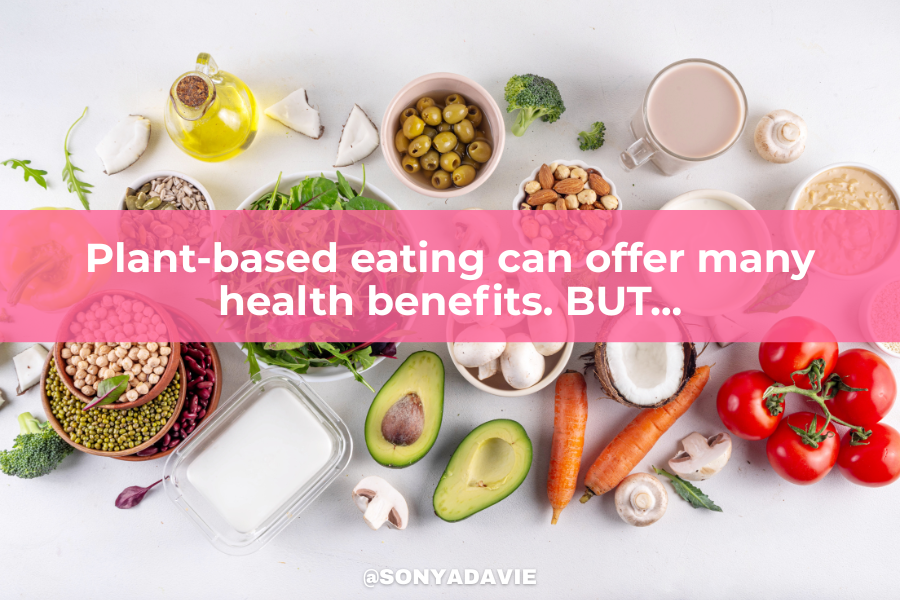
What we do know from other research is that vegetarian and vegan diets can run low in nutrients the brain relies on, including:
- Vitamin B12, B2, and B3
- Vitamin D
- Iodine
- Zinc
- Selenium
- Calcium and potassium
- Omega-3s (DHA and EPA)
⚠️ Important note:
This doesn’t mean plant-based diets are “bad.” With mindful planning, testing, and smart supplementation, they can absolutely support your wellbeing. The key is being proactive about filling gaps before they affect your mood.
This Diet May Affect Mental Health: Low-Calorie Diets and Depression
You may have heard “eat less, move more,” but cutting calories without paying attention to nutrition can backfire on your mental health.
A 2025 study in BMJ Nutrition, Prevention & Health analyzed over 28,000 U.S. adults and found:
- People on low-calorie diets scored higher on depression questionnaires than those not restricting calories.
- The effect was stronger in men (+0.50 PHQ-9 points) and those with higher BMI (+0.46).
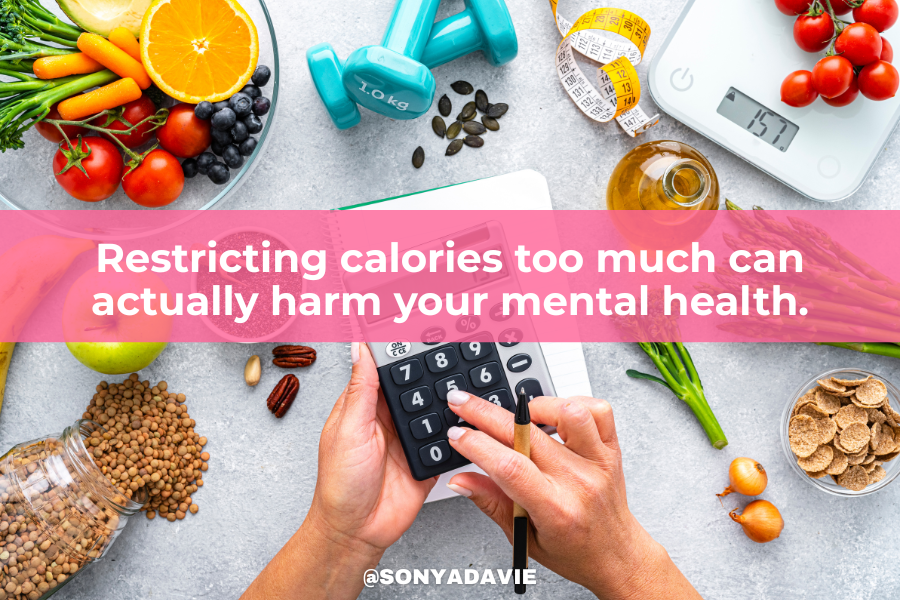
Why? Because calories don’t equal nutrients. Restricting food without focusing on nutrient quality can deprive your brain of what it needs to function.
👉 Bottom line:
Chasing calorie cuts alone while ignoring nutrient density may increase your risk of depression. True health isn’t just about eating less… It’s about eating well.
Why Nutrition Gets Missed in Depression Care
For decades, nutrition has been a small slice of medical training. In a 2022 survey, medical students reported getting an average of just 1.2 hours of formal nutrition education per year.
That’s starting to change.
In 2026, the U.S. Department of Health and Human Services announced that 73 medical schools have pledged to require at least 40 hours of nutrition education (or an equivalent competency standard) for students entering this fall. Major accrediting and licensing bodies have also committed to strengthening nutrition standards in medical training.
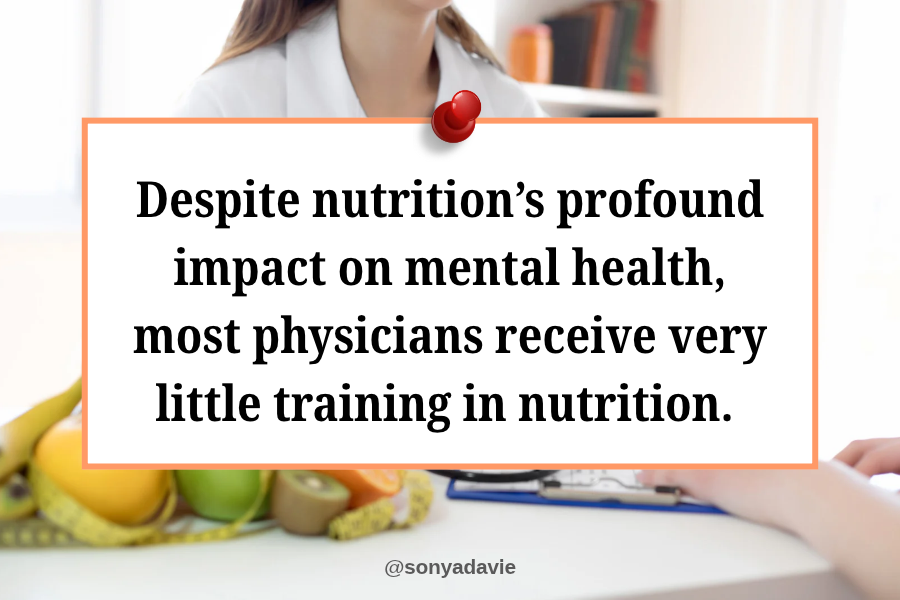
And I want to be clear: many physicians already close this gap on their own through continuing education after medical school, and they are doing excellent work.
But for patients who are being seen today, a 15-minute appointment often ends with a prescription and no basic nutrient or metabolic labs.
That matters, because deficiencies in vitamin D, B12, folate, iron, zinc, or omega-3s, and issues like thyroid imbalance or insulin resistance, can contribute to or mimic depression symptoms. Addressing them won’t replace every treatment, but it can change the whole picture.
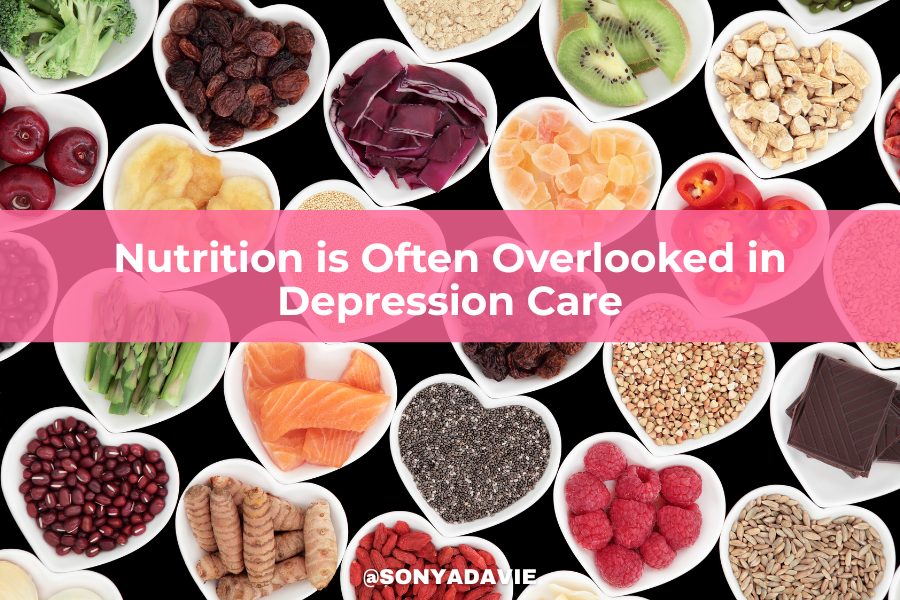
Biggest Takeaway?
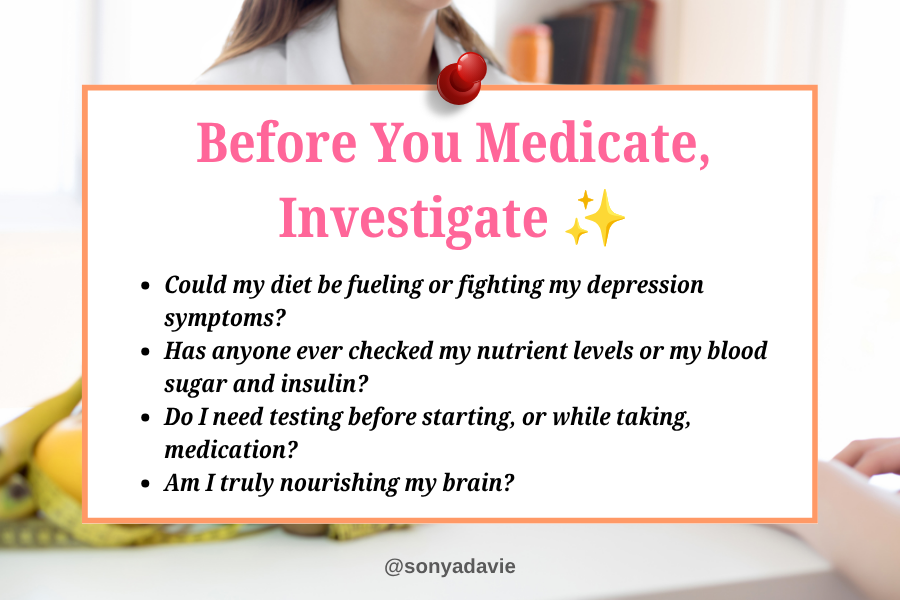
Before You Medicate, Investigate ✨
Depression isn’t one-size-fits-all. Antidepressants help many people, and for some they are life-changing. But nutrition and metabolic health are among the most underused tools we have.
This National Depression and Mental Health Screening Month, ask yourself:
- Could my diet be fueling or fighting my depression symptoms?
- Has anyone ever checked my nutrient levels or my blood sugar and insulin?
- Do I need testing before starting, or while taking, medication?
- Am I truly nourishing my brain?
Sometimes the key to feeling better isn’t only found in a prescription.
It’s found in understanding your unique biology, nourishing your body, and uncovering root causes.
As a mental health provider, I’ve seen this firsthand. Personalized approaches that consider nutrition, metabolism, lifestyle, and individual health factors make all the difference. This isn’t just theory. It’s what works when we focus on you.
If you’re currently taking psychiatric medication, please don’t stop or change it on your own. Talk with your prescriber first. This post is for education, not individual medical advice.
Ready to Go Deeper?
Start here!
Grab my free guide, 7 Questions to Ask Your Doctor Before Starting Psychiatric Medicine, so you walk into your next appointment prepared.
Your mental health deserves more than quick fixes. Before you medicate, investigate, understand, and reclaim your power. ✨
References
- World Health Organization. Depressive disorder (depression) fact sheet. Updated 2025.
- Centers for Disease Control and Prevention, NCHS. Depression prevalence in adolescents and adults: United States, August 2021–August 2023; and Characteristics of adults age 18 and older who took prescription medication for depression: United States, 2023. NCHS Data Brief No. 528. April 2025.
- Moncrieff J, Cooper RE, Stockmann T, et al. The serotonin theory of depression: a systematic umbrella review of the evidence. Molecular Psychiatry. 2022.
- Jacka FN, O’Neil A, Opie R, et al. A randomised controlled trial of dietary improvement for adults with major depression (the SMILES trial). BMC Medicine. 2017.
- Systematic review: Association between ultra-processed food consumption and risk of developing depression in adults. EMJ Gastroenterology. 2025.
- The risk associated with ultra-processed food intake on depressive symptoms and mental health in older adults: a target trial emulation. BMC Medicine. 2025;23:172.
- Oh DJ, et al. Insulin resistance and the risk of incident depression: the role of age, glycemic status, and adiposity in a prospective cohort study. The Lancet Regional Health – Western Pacific. 2025.
- Fanelli G, Bralten J, Franke B, et al. Insulin resistance and poorer treatment outcomes in depression: evidence from UK Biobank primary care data. British Journal of Psychiatry. 2026;229:26–35.
- Palacek K, Corbeil O, Katyal S, et al. Metabolic dysfunction and insulin resistance in depression: mechanisms, evidence, and therapeutic implications. Frontiers in Psychiatry. 2026;17:1930167.
- Matta J, et al. Depressive symptoms and vegetarian diets: results from the ELSA-Brasil cohort. Journal of Affective Disorders. 2022.
- Low-calorie diets and depressive symptoms in U.S. adults. BMJ Nutrition, Prevention & Health. 2025.
- U.S. Department of Health and Human Services. Advancing Nutrition Education initiative announcements, March and June 2026.





+ show Comments
- Hide Comments
add a comment