


Spring is supposed to feel light. Hopeful. Like a reset.
But what if it doesn’t?
What if, instead of feeling refreshed… you feel off, overwhelmed, or strangely low?
And then there’s that quiet thought in the background:
“Why does everyone else seem fine… and I don’t?”
For this blog, let’s talk about Spring Seasonal Affective Depression (SAD)!
What Is Spring Seasonal Depression?
Most people associate seasonal depression with winter. The darker days. The cold. The heaviness.
But for some people, mood actually dips in spring and summer.
This is sometimes called:
- spring depression
- spring-onset SAD
- or reverse seasonal depression
And it’s real… just not talked about enough.
Instead of feeling energized by longer days and warmer weather, you might feel:
- emotionally off
- mentally restless
- physically out of sync
And because it happens during a time when everyone else seems to be “coming back to life,” it can feel confusing… even isolating.
You might find yourself wondering why your internal world doesn’t match what’s happening outside.
Symptoms To Look For In Spring…
Spring seasonal depression shares core symptoms with other forms of depression: low mood, loss of interest, fatigue, and changes in sleep and appetite. But research and clinical descriptions suggest some patterns are more common in the spring–summer subtype:

- Persistent low mood or emptiness that returns each spring.
- Irritability, agitation, or feeling “amped up and miserable” at the same time.
- Anxiety and restless energy, rather than sluggishness.
- Insomnia or lighter, more fragmented sleep.
- Reduced appetite and possible weight loss.
- Difficulty concentrating and feeling “out of sync” with others’ energy.
It’s that strange mix of: tired… but wired… overstimulated… but low
And that combination can feel really unsettling.
If symptoms last most of the day, nearly every day, for at least 2 weeks and recur in a seasonal pattern, it’s important to consider a formal assessment for a depressive disorder with seasonal pattern specifier.
Why Spring Can Feel So Triggering?
Researchers are still clarifying why some people become more depressed in spring rather than winter, but several mechanisms likely play a role:
#1 Circadian Rhythm Shifts
Rapid changes in sunrise, sunset, and daily light exposure can disrupt internal body clocks, especially in sensitive nervous systems, leading to mood and sleep disturbances.
#2 Hormonal Changes
Shifts in melatonin and serotonin signaling across seasons may destabilize mood in vulnerable individuals.
#3 Allergies and Inflammation
Spring allergies can increase systemic inflammation, which is associated with lower mood and cognitive fatigue in some people.
#4 Social and Psychological Pressure
Cultural messages that spring is a time for “new beginnings,” body-focused messaging around summer, and increased social expectations can amplify shame, comparison, and stress for those already struggling.
#5 Loss of Winter Structure
People who naturally slow down and “hibernate” in winter may feel thrown off by spring’s faster pace and changing routines.
For many, it’s less about the season itself and more about how quickly the environment is changing and how that interacts with nervous system sensitivity.
If You’re a Highly Sensitive Person (HSP), This Might Hit Even Harder!
Sensory processing sensitivity (SPS) is the temperament trait underlying being a Highly Sensitive Person (HSP). Research suggests that people with seasonal affective disorder tend to score higher on measures of sensitivity than non-SAD controls, and that higher sensitivity is associated with more severe seasonal symptoms.

One longitudinal study found:
- About 25% of individuals with SAD scored in the “highly sensitive” range, compared to about 5% of healthy controls. (Source)
- Sensitivity scores tended to increase during the symptomatic (depressed) season.
- Higher sensitivity scores in summer predicted more severe SAD symptoms in winter.
While this study focused on winter-pattern SAD, it supports what many HSPs report clinically: a highly attuned nervous system can function as both a strength and a vulnerability.
Rapid changes in light, temperature, pollen, social obligations, and noise in spring can easily overwhelm HSPs’ capacity to regulate.
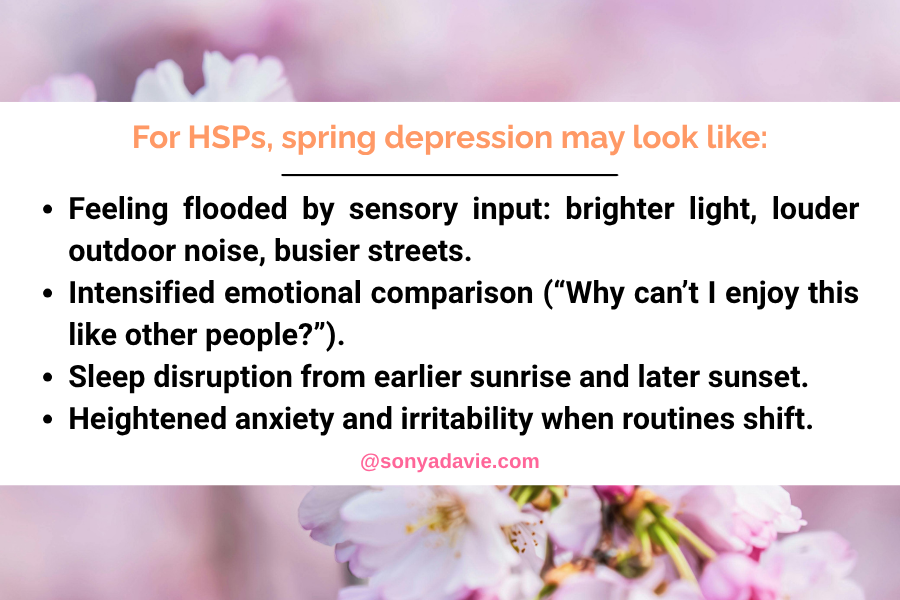
Naming this pattern can be deeply validating for HSPs and opens the door to proactive seasonal planning.
What Actually Helps (Without Overwhelming Yourself)
Evidence-based supports for seasonal depression include a combination of psychotherapy, lifestyle strategies, and light-based treatments.
Instead of trying to “push through” spring, think of this as supporting your nervous system through a transition.
Not forcing.
Not fixing.
Just supporting.

1. Protect Your Sleep Rhythm
Consistency is key. Try to keep your sleep and wake times stable, even as daylight changes. This helps regulate your circadian rhythm and supports overall mood.
2. Be Intentional With Light Exposure
Light can either help or overwhelm, depending on your nervous system. Some people feel better with bright morning light, while others, especially anxious or sensitive HSPs, benefit from a slower, softer start. Collaborating with a clinician or experimenting mindfully can help you find what works best.
3. Move… Gently
You don’t need intense workouts. Even light daily movement, like walking, stretching, or slow yoga, helps regulate mood and supports circadian alignment without overwhelming your system.
4. Reduce Sensory Overload Where You Can
Many HSPs and mood-sensitive individuals feel overstimulated by harsh overhead lighting. Softer, adjustable lighting and fidgets can help regulate arousal.
- Softer lighting in the evening
- Quieter spaces whenever possible
- Intentional stillness or mindfulness breaks
5. Support your body, too
Spring allergies, inflammation, or sleep disruption can all contribute to low mood. Addressing these physical factors often improves mental well-being too.
6. Talk About It
Whether through therapy, journaling, or sharing with someone safe, naming what you’re experiencing reduces shame and isolation. Evidence-based therapy options like CBT, trauma-informed therapy, or integrative approaches can help you track seasonal patterns, challenge negative self-talk, and develop regulation skills and healthy boundaries.
7. Create a Sense of Grounding
Spring depression often feels like being “tired but wired.” Tools that provide gentle, calming pressure can support nervous system regulation.
What if nothing is “wrong” with you?
What if your system just responds differently to seasonal change?
What if spring isn’t your blooming season… but your adjusting season?
You don’t have to match the energy of the world around you. You’re allowed to move at your own pace.
If This Is Happening to You…
Let this be your reminder:
You’re not broken.
You’re not “too sensitive.”
And you’re not the only one who feels this way.
Spring doesn’t feel good for everyone. And that deserves to be talked about more.





+ show Comments
- Hide Comments
add a comment