


On the outside, your life might look “together.”
You’re showing up. You’re functioning. You’re getting things done.
But underneath it all… your body might still be operating from survival.

I see this all the time, not just with therapy clients, but with high-performing professionals, Highly Sensitive Persons (HSPs), trauma survivors, and even NYPD officers I work with.
Because the truth is:
You can look successful…and still have a nervous system that feels like it’s under constant threat.
Let’s talk about what this actually looks like. Here are 7 signs your body may be stuck in survival mode, and what they really mean.
1. You’re Always “On” (Even When You’re Trying Not to Be)
Your body doesn’t really power down.
You wake up already wired. You go to sleep still carrying tension.
Even rest feels… restless.
You might notice:
- A constant urge to stay busy
- Difficulty sitting still without distraction
- A mind that keeps scanning, planning, anticipating
For many HSPs, everyday stimuli, noise, conflict, even a full inbox, can feel overwhelming.
And for trauma survivors, this “always on” state often gets mistaken for personality… when it’s actually a nervous system that hasn’t learned it’s safe to slow down.
2. You Sleep… But You Don’t Feel Rested
You’re technically getting enough sleep. But your body isn’t restoring.
You might:
- Wake up exhausted
- Feel “wired and tired” at night
- Wake up in the middle of the night with racing thoughts
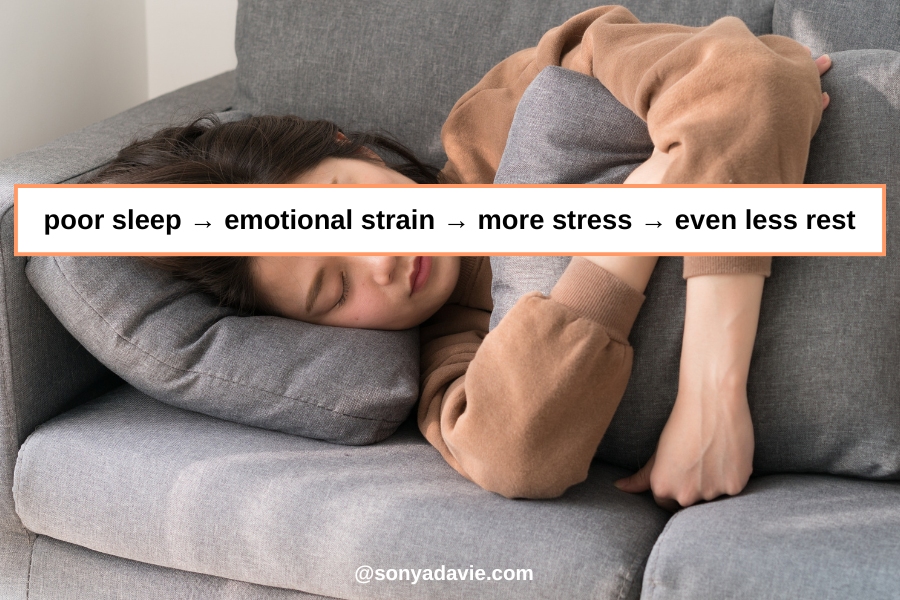
Chronic stress keeps your cortisol levels elevated, making it harder to access deep, restorative sleep.
So the cycle continues:
3. Your Body Speaks Through Symptoms
When stress isn’t processed emotionally, it gets expressed physically.
Your body starts communicating in the only way it can.
This can look like:
- Tight shoulders or jaw clenching
- Frequent headaches or migraines
- Digestive issues (bloating, IBS, nausea)
- A racing heart or chest tightness
- Getting sick more often than usual
This isn’t your body “failing.” It’s your body asking for support.
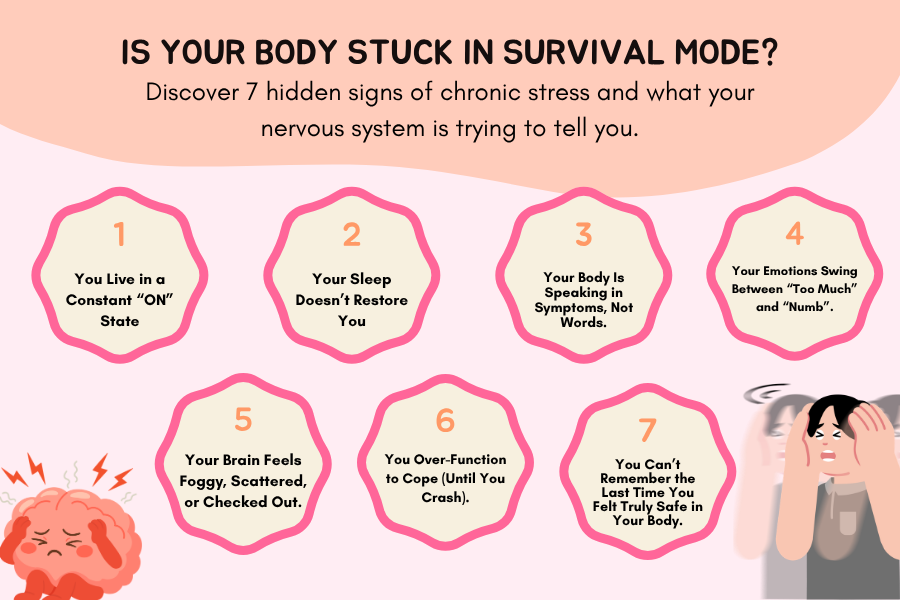
4. Your Emotions Feel Intense… or Completely Shut Down
Survival mode isn’t always obvious.
Sometimes it looks like emotional overwhelm. Other times, it looks like numbness.
You might:
- Feel triggered by small things
- Snap, then feel immediate guilt
- Shut down emotionally
- Struggle to feel joy or connection
For HSPs and trauma survivors, this isn’t a flaw.
It’s protection. Your system is trying to prevent overload the best way it knows how.
5. Your Mind Feels Foggy or Disconnected
You want to focus… but something feels off.
You might notice:
- Forgetfulness
- Trouble concentrating
- Starting tasks but not finishing them
- Feeling constantly behind
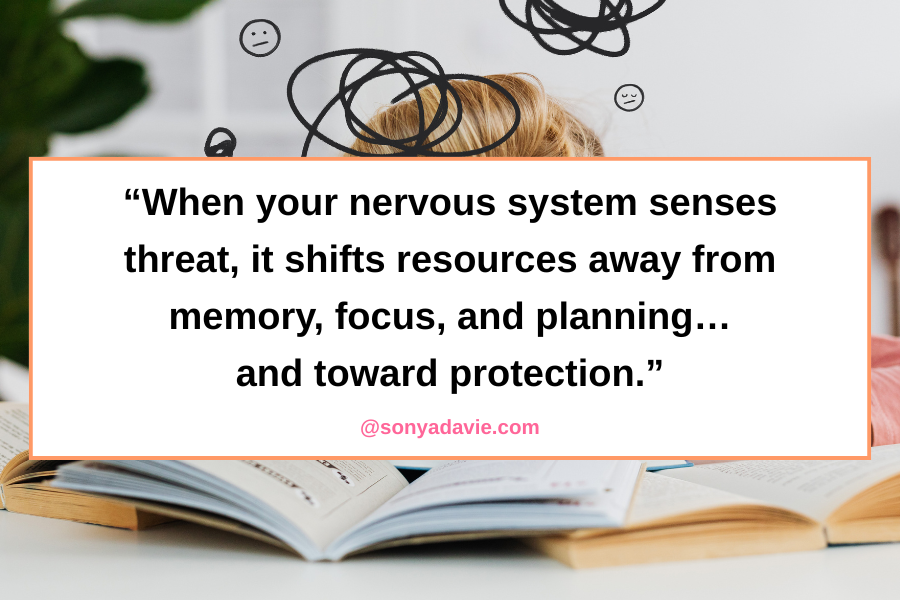
This isn’t about discipline. It’s about your brain prioritizing survival over clarity.
6. You Over-Function… Until You Can’t
This is where high achievers often get stuck.
You keep going.
You push through.
You show up for everyone.
You might:
- Say yes when you’re already overwhelmed
- Be “the strong one” others rely on
- Use productivity to cope with internal stress
From the outside, it looks like success. But internally, your system is running on empty.
And eventually… your body forces a pause.
7. You Don’t Feel Safe in Your Own Body Anymore
This one is quiet,but powerful.
When you slow down, instead of feeling calm… you feel:
- Restless
- Irritated
- Guilty for not doing something
You may not even remember what true calm feels like.
Because somewhere along the way, your body learned:
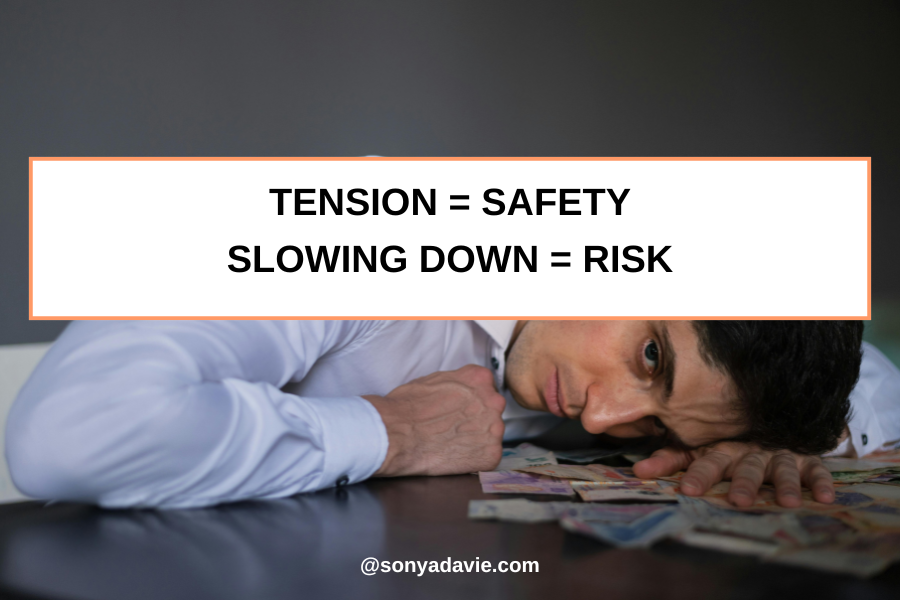
That’s survival mode.
So… What Do You Do If This Feels Like You?
First, nothing is wrong with you. Your body is doing exactly what it was designed to do in response to stress. But here’s what most people don’t realize:
You can’t think your way out of survival mode.
You have to support your nervous system.
That looks like:
- Learning how to regulate your body (not just your thoughts)
- Creating daily rhythms that allow recovery
- Gently interrupting patterns your system has normalized
- And most importantly… having the right tools to do that consistently.
If you’re reading this and thinking, “This is me…” I want to give you something practical,not just awareness. Check this out!
The Stress Recovery Toolkit was created for you if:
- You feel constantly “on” but don’t know how to switch off
- You’re high-functioning but deeply exhausted
- You’ve tried self-care… but it hasn’t gone deep enough
This isn’t about doing more. It’s about finally helping your body feel safe again.
You don’t have to wait until burnout forces you to stop.
Awareness is your first signal. Support is your next step.
And healing?
That’s absolutely possible, for both your mind and your body. 💛





+ show Comments
- Hide Comments
add a comment