


Research shows that everyday lifestyle habits can quietly deplete your nervous system, disrupt hormonal rhythms, and leave you feeling foggy, wired, and worn out, often long before “lab” work shows anything is “abnormal.”

Many people sense that something is off, yet struggle to explain why rest no longer feels restorative or motivation feels harder to access.
The encouraging news is this: fatigue rooted in stress physiology is often reversible. Targeted, evidence-based lifestyle and stress-recovery interventions can help restore balance across brain–body systems, allowing energy, clarity, and emotional steadiness to return without forcing your way through exhaustion.
The Hidden Energy Drain No One Talks About…
Many high-achieving adults assume exhaustion is simply the cost of success, caregiving, or “doing it all,” but more often, it reflects a nervous system that has been operating in survival mode for too long.
When the stress-response system commonly referred to as the HPA axis remains activated beyond the body’s capacity to recover, cortisol and related hormones lose their natural daily rhythm.
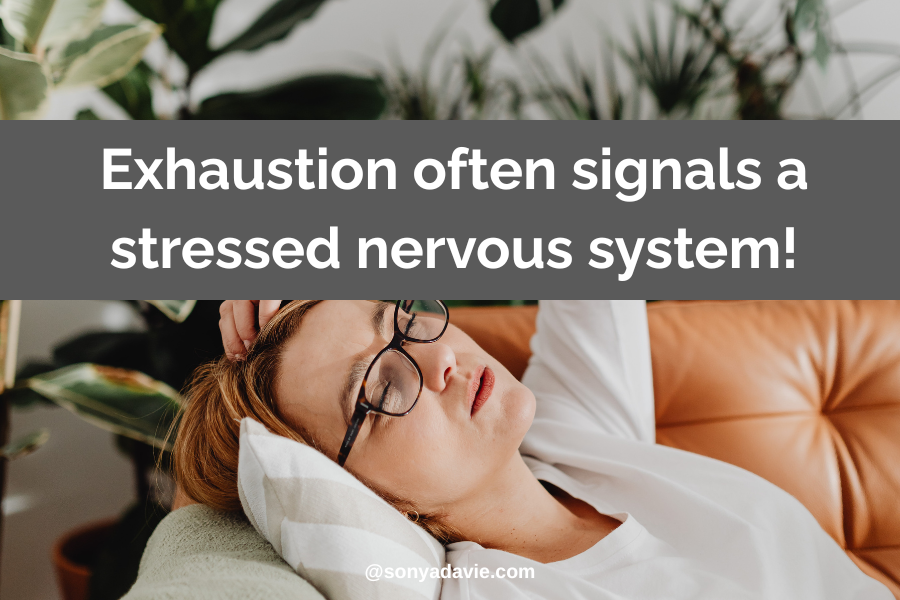
This disruption can show up as:
- Non-restorative sleep
- Brain fog and reduced focus
- Low mood or heightened emotional reactivity
- Persistent fatigue that doesn’t improve with rest
From a nervous-system and functional psychiatry perspective, these symptoms aren’t failures… they’re feedback (from an overwhelmed nervous system). They signal that the body is asking for regulation and recovery, not more pressure, discipline, or motivation.
Here are the top three energy-draining habits I see in practice:
Energy Drain #1: Chaotic Stress Patterns
One of the most underestimated drains on energy isn’t a single major stressor, it’s the constant presence of micro-stressors.
Emails, notifications, caregiving responsibilities, financial concerns, and unending mental checklists can keep the stress response (HPA Axis) partially activated all day long.
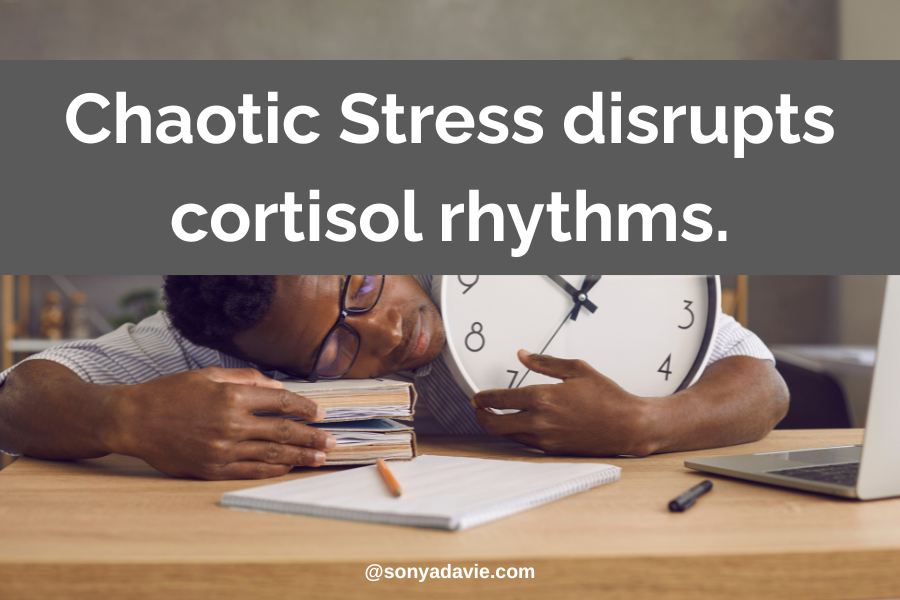
Over time, this chronic activation disrupts cortisol rhythms, which are strongly associated with fatigue, low motivation, anxiety vulnerability, depression, and emotional exhaustion.
Signs your stress physiology is draining you:
- You wake up tired, even after a full night in bed
- You feel wired in the evening but crash mid-afternoon
- You rely on caffeine to function and sugar to push through
Research consistently shows that structured stress-regulation practices such as paced breathing, mindfulness, and intentional micro-breaks can significantly reduce emotional exhaustion and burnout.
In practice, people who learn a repeatable nervous-system calming process often report steadier energy, clearer thinking, and less emotional reactivity, even when life remains demanding.
Energy Drain #2: Disrupted Circadian Rhythm
Your body operates on a 24-hour internal clock that regulates sleep, hormones, digestion, immune function, and energy production. When this rhythm is disrupted, fatigue almost always follows.
Irregular sleep schedules, late-night screen exposure, inconsistent meal timing, and shift-like daily patterns can confuse this internal clock, leading to poor sleep quality and daytime sluggishness.
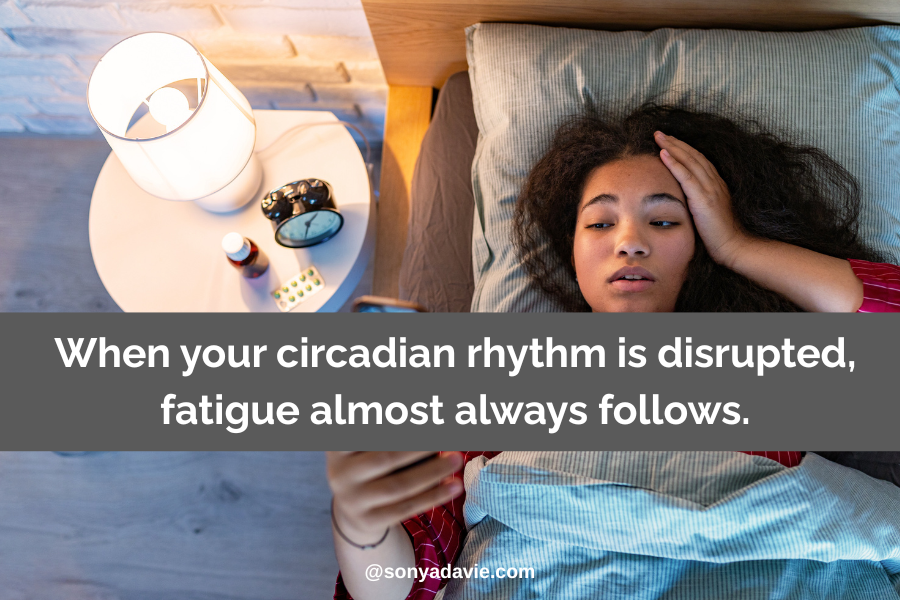
Lifestyle habits that quietly break your energy rhythm:
- Scrolling on devices in bed, delaying melatonin release
- Sleeping and waking at drastically different times on weekdays versus weekends
- Eating heavy or late meals that interfere with nighttime repair
Studies show that stabilizing circadian rhythms through consistent sleep-wake times, morning light exposure, and calming evening routines can improve fatigue, mood, and cognitive performance. Even brief, structured circadian interventions have been shown to meaningfully reduce persistent tiredness.
Energy Drain #3: All-or-Nothing Living (Without Recovery)
Many exhausted professionals live in an all‑gas, no‑brake pattern: long stretches of overwork or overtraining followed by total collapse, with little intentional recovery built into daily life. Both extremes… sedentary days glued to a screen and intense exercise without adequate rest, can impair mitochondrial function, strain the nervous system, and deepen fatigue.
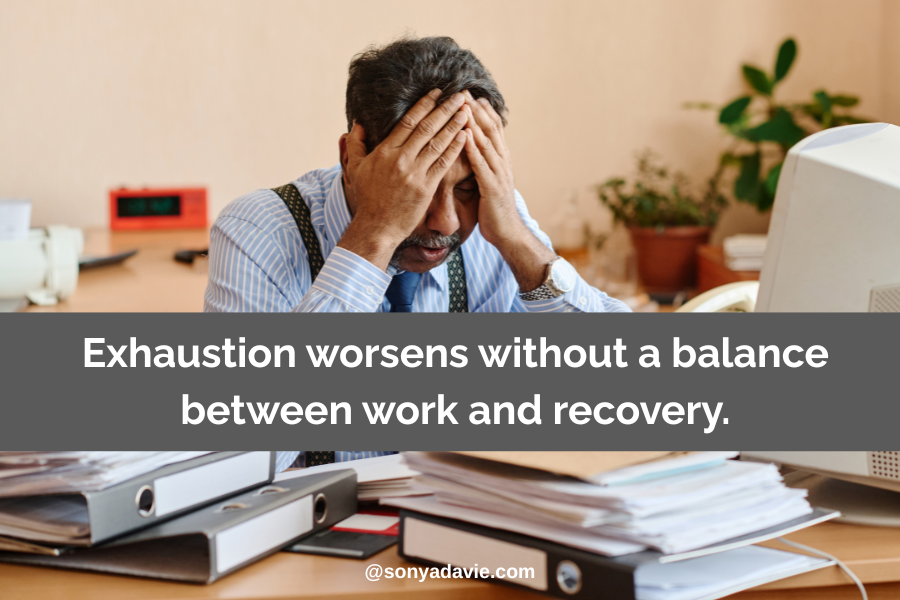
This pattern often looks like:
- Pushing through the day without breaks, then numbing at night
- Cycling between extreme diets or workout plans and total burnout
- Only resting when sick, injured, or emotionally overwhelmed
Evidence from burnout-prevention and stress-reduction programs shows that when people are guided to build realistic activity pacing, restorative movement, and intentional recovery, they experience better sleep, lower stress, and improved emotional well-being.
Over time, these small but consistent adjustments help reset the brain’s threat-detection systems so the body does not interpret every email, conflict, or change in plan as an emergency.
Why You Need a System, Not Just More Willpower!
If any of this feels uncomfortably familiar, the problem is unlikely to be a lack of discipline; it is the absence of a structured stress-recovery framework that fits real life.
Research on stress management shows that guided, stepwise programs rather than scattered tips are what reliably reduce perceived stress, emotional exhaustion, and chronic fatigue.
When you have clear tools, short practices, and a simple sequence to follow, your nervous system learns safety and recovery through repetition, which is how sustainable energy is rebuilt.
A thoughtfully designed stress-recovery framework can help you:
- Understand your personal stress and energy patterns
- Use brief, science-backed regulation practices consistently
- Protect circadian rhythm without rigid routines
- Build micro-recovery into a busy life without overhauling everything
For many people, this kind of approach becomes the missing bridge between knowing they’re exhausted and finally feeling like themselves again, allowing the brain, body, and lifestyle to move together toward steadier, more reliable energy.
As a therapist and health coach, my greatest passion is helping you tune into your body’s signals without judgment or self-blame. True restoration happens when you have simple, practical tools to support your nervous system, rather than pushing harder.
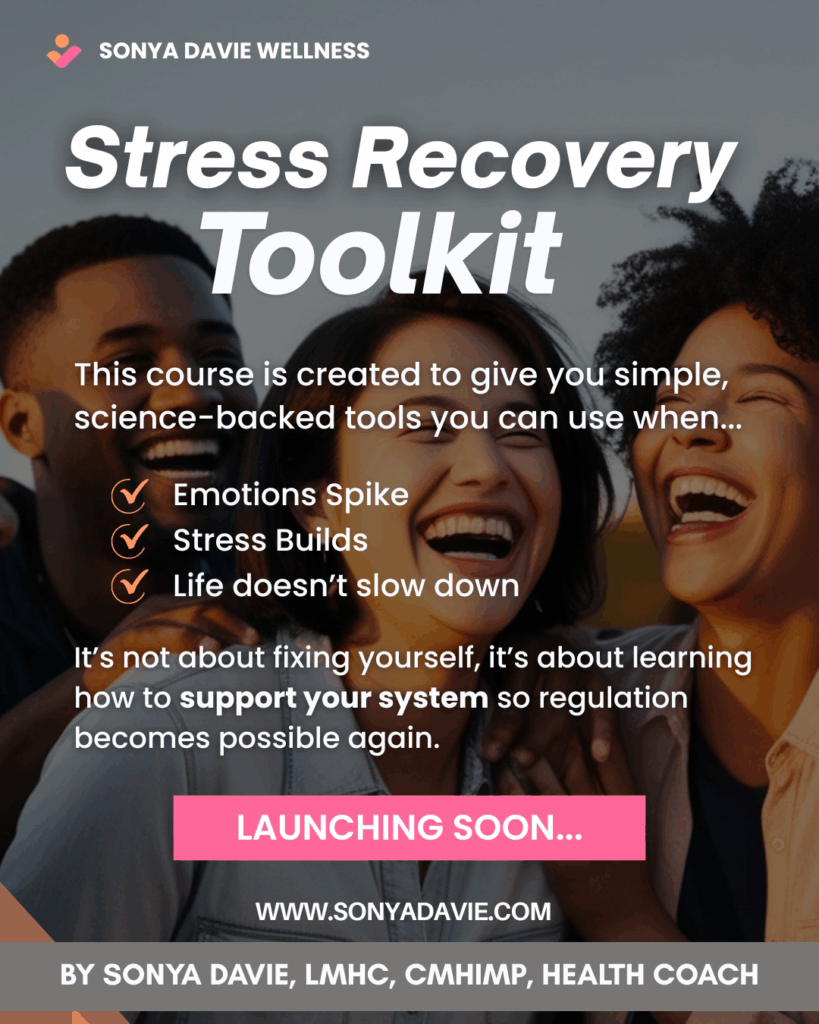
With you in mind, I’m thrilled to share that my Stress Recovery Toolkit is launching soon — designed to help you gently rebuild energy, calm your mind, and feel like yourself again.





+ show Comments
- Hide Comments
add a comment