


By Sonya Davie, LMHC, INHC, CMHIMP · Founder, Sonya Davie Wellness
If you’ve caught yourself saying, “I’m just tired,” more times than you can count this year, this is worth a closer look.
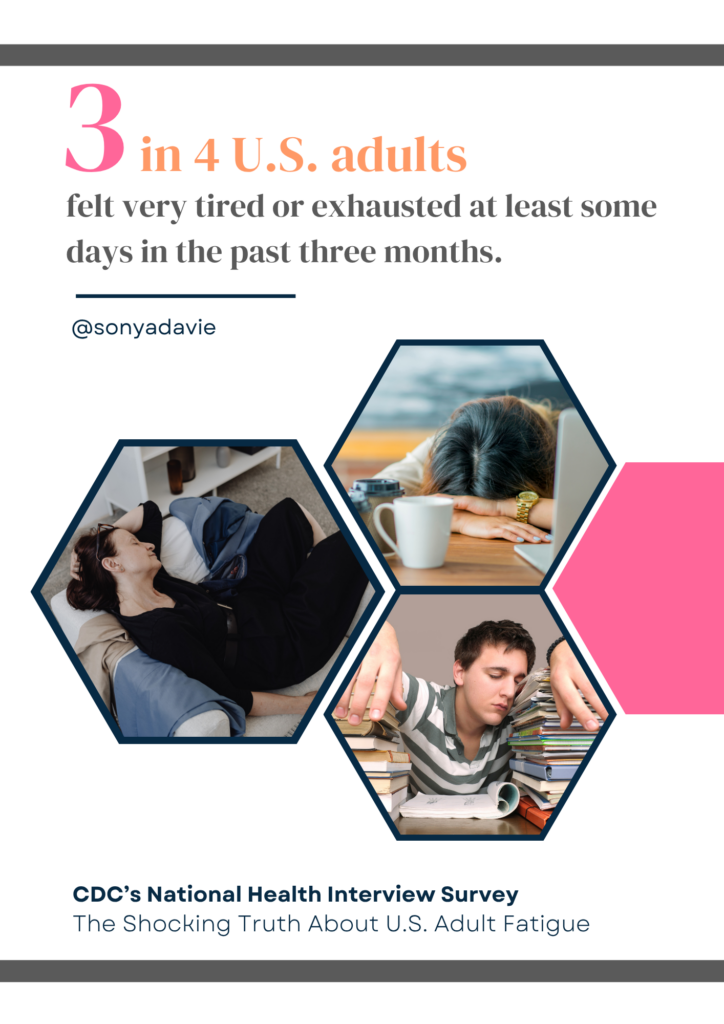
New data from the CDC’s National Health Interview Survey found that nearly 3 in 4 U.S. adults experienced some level of tiredness or exhaustion in the past three months. For about 1 in 6 adults (16.6%), that tiredness wasn’t occasional. It showed up most days or every day. (Source)
From an integrative and functional psychiatry-informed perspective, that number matters.
Fatigue isn’t simply about having “low energy.”
It can be one of the ways your body signals that something needs attention, whether that involves sleep, stress, mood, nutrition, metabolism, inflammation, or other underlying factors.
The Numbers Behind the Tired…
The CDC breaks it down like this:
- 28.5% of adults said they never felt very tired or exhausted in the past three months.
- 54.9% felt tired on some days.
- 10.7% felt tired on most days.
- 5.9% felt tired every day.
Put those last two groups together, and you get 16.6% of adults experiencing frequent fatigue.
And frequent fatigue wasn’t evenly distributed.
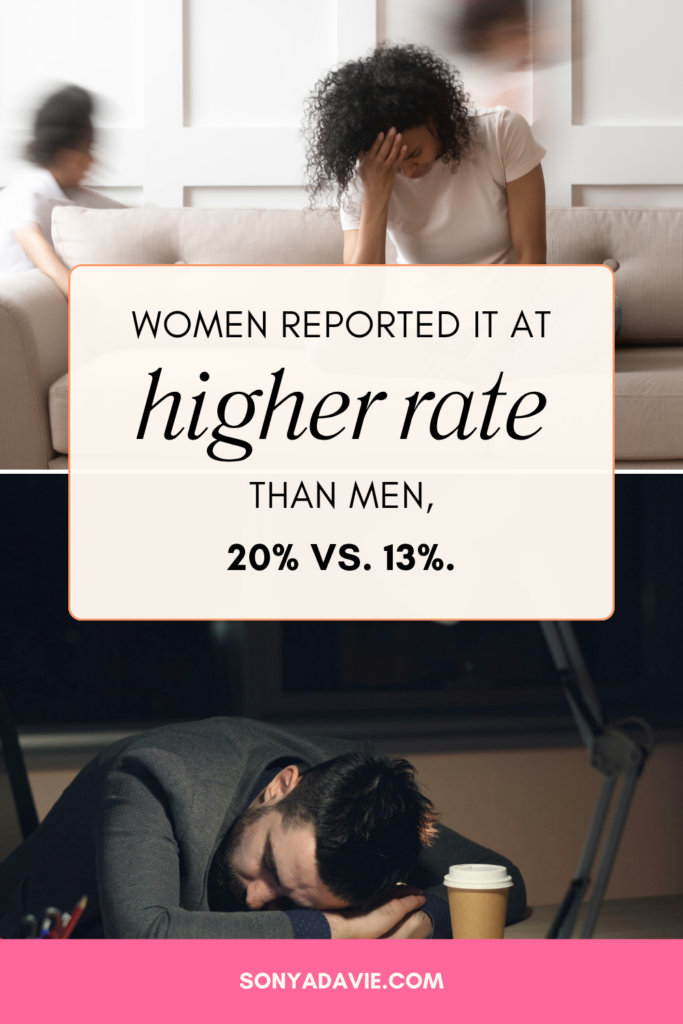
Women reported it at a higher rate than men, 20% vs. 13%.
Younger adults ages 18–34 reported the highest rate at 19.5%, while adults 65 and older reported the lowest at 12.9%.
Rates also varied across racial and ethnic groups, ranging from 9.1% among Asian adults to 25.5% among American Indian/Alaska Native adults.
It’s Rarely “Just” Fatigue
Here’s the part that really stood out to me clinically.
Among adults experiencing frequent fatigue:
- 69.6% also reported symptoms of anxiety.
- 45% reported symptoms of depression.
- 46.1% reported cognitive difficulties, such as problems with memory, focus, or decision-making.
Nearly 9 in 10 people with frequent fatigue (89.1%) reported at least one of these co-occurring difficulties, and just over half (50.9%) reported three or more.
Compared with adults without frequent fatigue, those experiencing frequent fatigue were roughly three times as likely to report depression symptoms and about twice as likely to report anxiety symptoms or cognitive difficulty.
Now, this doesn’t mean fatigue causes anxiety, depression, or brain fog. The relationship can go both ways, and there may be shared underlying factors.
This is where an integrative and functional psychiatry-informed lens can be helpful.
Fatigue, mood changes, and cognitive fog can sometimes travel together when multiple systems are under strain. Chronic stress, disrupted sleep, inflammation, blood-sugar regulation, nutritional deficiencies, hormonal changes, and other health factors can all play a role.
For example, chronic low-grade inflammation happens when the immune system stays “switched on” longer than it needs to, releasing signaling proteins called cytokines that can influence brain function and mood.
Insulin resistance, meanwhile, occurs when the body’s cells stop responding as efficiently to insulin, making it harder for the body to regulate blood sugar and use energy effectively.
When the body is working harder than it should to regulate inflammation or maintain steady energy, the brain can feel it too — showing up as fatigue, anxiety, brain fog, or sometimes all three at once.
When Fatigue Starts Running Your Life
The CDC data also gives us a glimpse into just how disruptive frequent fatigue can be.
Adults with frequent fatigue were more than twice as likely to report work limitations: 36% compared with 15.3% among adults without frequent fatigue.
They were also more likely to report difficulty participating in social activities. 12.8% reported significant difficulty or being unable to participate socially, compared with just 2.6% of adults without frequent fatigue.
And for many people, this wasn’t a fleeting afternoon slump.
Among adults with frequent fatigue, 34.5% said their symptoms lasted most of the day, while 20.2% said they lasted all day. Nearly 4 in 10 (38.8%) described their fatigue as “a lot” in intensity.
That’s more than simply needing another cup of coffee.
The Biggest Takeaway From This
Fatigue this common and this disruptive isn’t something to simply push through. It’s data.
When exhaustion, mood changes, and mental fog show up together, it may be worth looking beyond the obvious and asking what could be contributing. Your stress response, sleep, metabolism, nutrition, and other systems can all influence how you feel.
That doesn’t mean something is necessarily wrong, or that you need a long list of tests or supplements.
It means paying attention to the signal.
If you’ve been chalking up your exhaustion to “I’m just busy,” try asking a different question:
What might my body be trying to tell me?





+ show Comments
- Hide Comments
add a comment