


By Sonya Davie, LMHC, INHC, CMHIMP · Founder, Sonya Davie Wellness
You’ve been this person.
Depression that doesn’t seem to respond the way it should.
Exhaustion that sleep doesn’t touch. Weight that keeps creeping up no matter what you change. A brain that feels foggy, slow, unmotivated — not necessarily deeply sad.
Just stuck.

You’ve tried the SSRI. Then another. Maybe even a third.
Your bloodwork comes back “normal.”
And somewhere in there, the conversation can quietly shift from…
“What could be contributing to this?” to “Have you tried therapy?”
…as if the two were mutually exclusive.
But what if, for some people, there is more happening biologically beneath the surface?
There’s a name circulating in the research for what’s actually happening in a meaningful subset of these cases. It’s not an official diagnosis. It’s not something you’ll get written on a chart by your psychiatrist or PCP.
But the pattern is real, it’s been described in the scientific literature, and it’s called immuno-metabolic depression.
What the Research Is Actually Describing
Immuno-metabolic depression isn’t a wellness buzzword.
It refers to a proposed biological profile of depression in which three things tend to cluster together: low-grade inflammation, metabolic dysregulation, and a particular pattern of depressive symptoms.
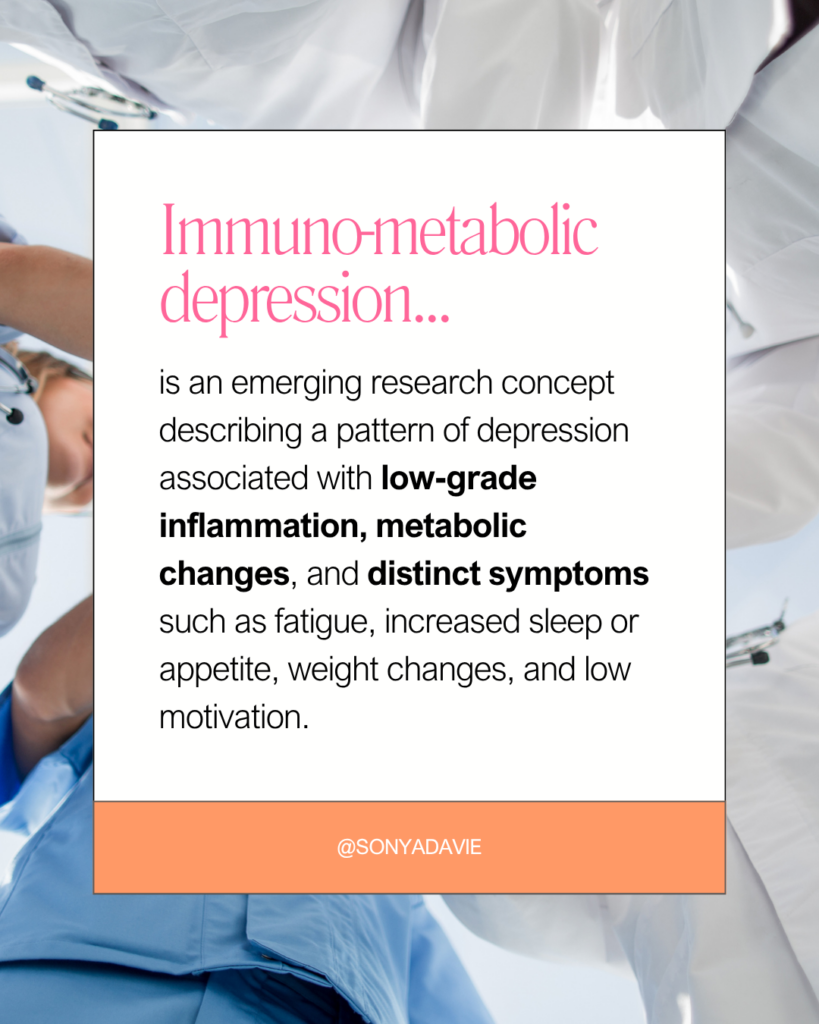
- Low-grade inflammation — elevated inflammatory markers your body produces when it’s under chronic stress, not fighting an infection
- Metabolic changes — including insulin resistance, when cells become less responsive to insulin, and abdominal weight gain
- A particular symptom pattern — including fatigue, increased sleep, increased appetite, cognitive difficulties, and low motivation
In other words, researchers aren’t simply looking at whether someone feels sad or depressed. They’re investigating whether, for some people, depression occurs alongside measurable changes in the body’s immune and metabolic systems.
And this isn’t a tiny group.
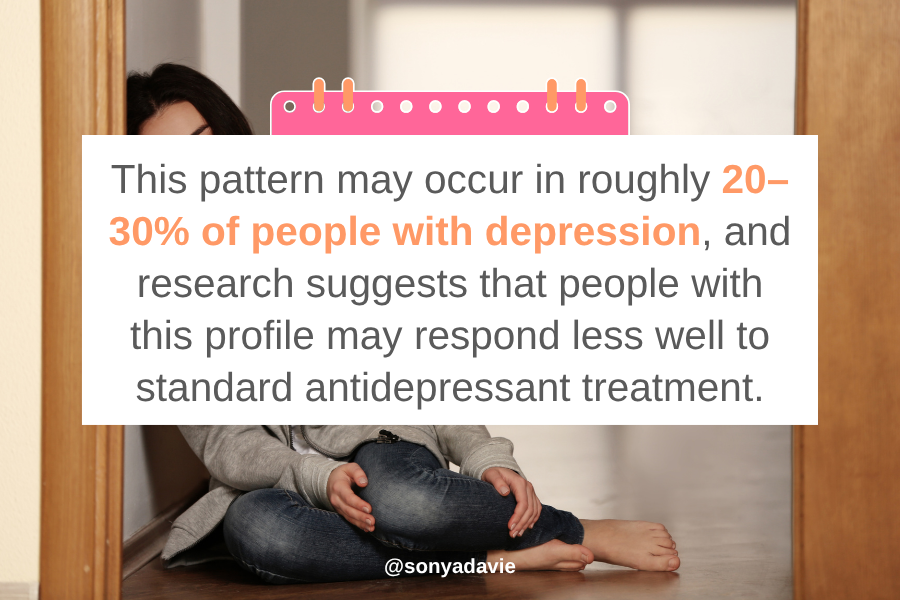
A 2026 World Psychiatry paper puts real numbers on it. (Source)
This clustering shows up in roughly a quarter to a third of people with depression.
A companion review in The Lancet Regional Health – Europe found similar rates, 20 to 30% — and noted something that should stop every prescriber in their tracks: people with this pattern tend to respond less well to standard antidepressant treatment. (Source)
Read that again.
This does not mean antidepressants don’t work. It does not mean everyone with depression needs an extensive metabolic workup.
And it certainly does not mean you can diagnose yourself based on fatigue, appetite changes, or a list of symptoms.
What it does suggest is that “depression” may describe the symptom picture without fully explaining the biology underneath it.
For some people, the immune and metabolic systems may be part of that picture, and researchers are increasingly asking what that means for more personalized approaches to treatment.
Why This Isn’t a Diagnosis — Yet
“Metabolic depression” is not currently an official diagnosis in the DSM-5-TR, the diagnostic manual clinicians use to classify mental health conditions. There is also no single validated clinical test that tells your doctor, “Yes, this is immuno-metabolic depression.”
What does exist is a growing body of research showing that depression is biologically heterogeneous, meaning it may involve different underlying biological pathways and patterns rather than one single cause or mechanism.
Researchers have identified a subset of people with depression who show a particular combination of inflammatory activity, metabolic abnormalities, and depressive symptoms.
This is what researchers are referring to when they discuss an immuno-metabolic profile or immuno-metabolic depression.
That distinction matters.
This isn’t about self-diagnosing from a research abstract or assuming that fatigue, weight gain, increased appetite, or low motivation automatically means you have this profile.
It’s about recognizing that a diagnosis of “depression” describes the clinical picture, but it may not tell the whole biological story.
For some people, immune and metabolic factors may be part of that picture. Understanding these patterns could eventually help researchers and clinicians develop more personalized approaches to assessment and treatment.
So Why Isn’t Anyone Checking for This?
This is where the healthcare system gets complicated.
Even when a psychiatrist or primary care clinician wants to look beyond the immediate symptoms, the structure of a typical visit can make that difficult.
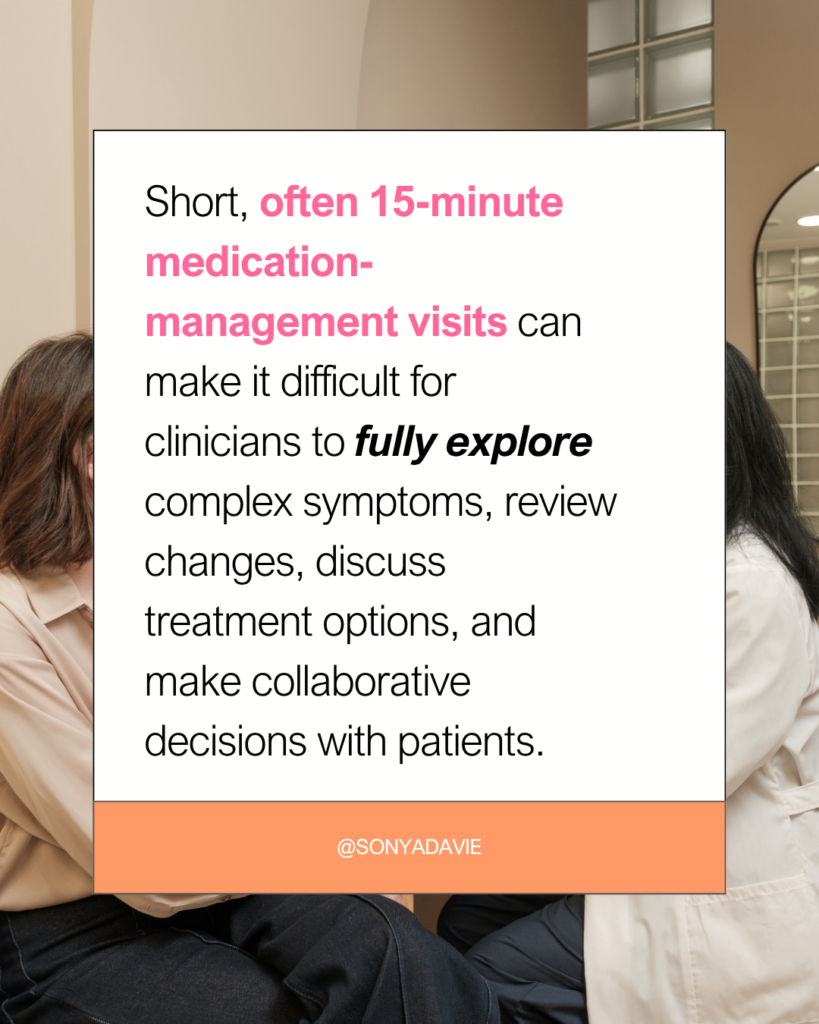
Medication-management visits, the standard follow-up appointments where many people see their prescriber, are often built around 15-minute time slots.
Psychiatric literature has raised concerns that a window this short may not provide enough time to take a thorough history, assess what’s changed, discuss treatment options, and make decisions collaboratively, especially when the clinical picture is complex.
And investigating an immuno-metabolic pattern takes more than asking,
“How are you feeling?”
It may require looking at the bigger picture: sleep, stress, nutrition, physical activity, metabolic health, medications, medical conditions, and relevant laboratory markers. Those conversations take time.
Primary care faces similar pressures. Research on visit length has found that shorter appointments can be associated with less comprehensive evaluation, making it harder to address multiple concerns during a single visit.
This isn’t a story about bad clinicians. Most clinicians are working within a system shaped by time constraints, reimbursement structures, and increasingly complex patient needs. Many go beyond those limitations through their own education and clinical practice.
It’s a structural issue.
A 15-minute slot was never designed to ask “what’s happening in this person’s body, not just their brain” — and when that question doesn’t get asked, patients get another prescription instead of an answer.
What This Means If You’ve Been Here
If you’ve cycled through medications without getting the relief you hoped for…
If you’ve been told your labs are “normal” without anyone explaining which labs were checked, why they were ordered, or what they can actually tell us…
If fatigue, brain fog, appetite changes, weight changes, or sleeping too much have been folded into the category of “just depression”…
You are not imagining what you’re experiencing.
And it doesn’t necessarily mean your medication was wrong. It doesn’t mean therapy isn’t valuable, either.
It may simply mean there are additional questions worth asking.
The research on immuno-metabolic depression is still evolving. We don’t yet have a standardized clinical test or established treatment protocol for identifying and treating this specific biological profile.
But that doesn’t make the research irrelevant.
It gives us another reason to look at the whole picture — including inflammation, metabolic health, sleep, nutrition, stress, physical symptoms, medications, and other factors that may be contributing to how you feel.
This isn’t about finding a single hidden cause or replacing conventional mental health care. It’s about asking better questions.
What else might be contributing to what I’m experiencing?
And what could a more complete evaluation look like if there were enough time to actually explore that question?
Track What Your Next Doctor’s Appointment Might Not Have Time For
Sometimes, having a little more information about your own health between appointments can make your next conversation with your clinician more productive.
A body composition scale can give you more information than weight alone. The Loftilla scale uses bioelectrical impedance analysis to estimate several body-composition measures, including body fat and a visceral fat grade.

That doesn’t make it a diagnostic tool, and these measurements shouldn’t be treated as a substitute for clinical testing. But tracking trends over time can give you another data point to discuss with your healthcare provider.
A home blood pressure monitor can serve a similar purpose. Rather than relying only on a single reading taken during an office visit, home monitoring can help you and your clinician see your blood-pressure patterns over time.
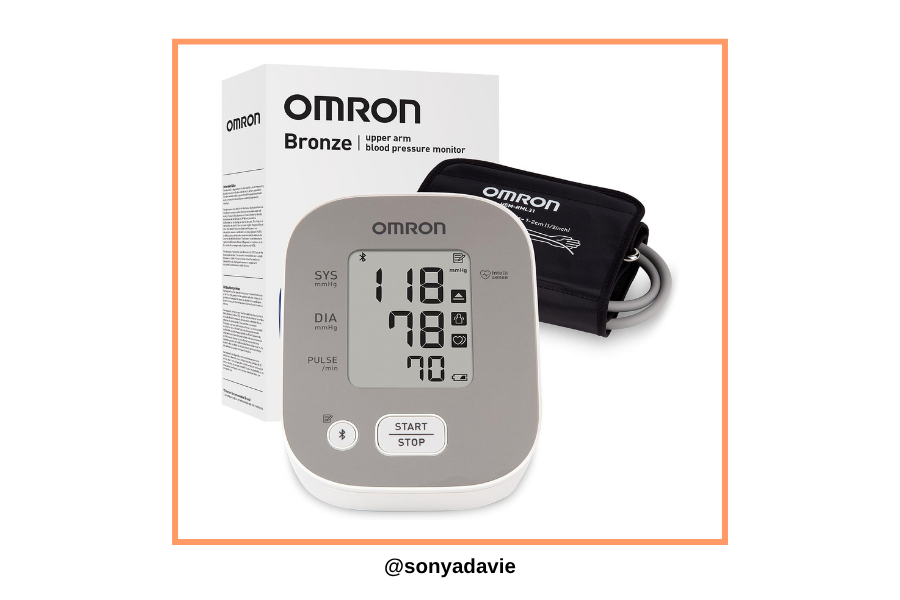
Neither of these replaces medical evaluation or tells you what’s causing your symptoms. Think of them as additional data points you can bring to the conversation.
Because when your appointment is built around a 15-minute window, having a clearer picture of what’s happening between visits can give you,and your clinician, more information to work with.
Want to Ask Better Questions at Your Next Appointment?
If this post has you thinking, “What should I actually ask my doctor?” I created a handy downloadable guide to help you prepare: 7 Questions to Ask Your Doctor Before Starting Psychiatric Medication. It’s designed to help you have a more informed conversation about your options, what to expect, and what questions may be worth exploring before starting a medication.
Reference:
Penninx, B. W. J. H. (2026). Immuno-metabolic depression: Challenges ahead for identification and intervention. World Psychiatry, 25(2), 226–227. https://doi.org/10.1002/wps.70047





+ show Comments
- Hide Comments
add a comment