


By Sonya Davie, LMHC, INHC, CMHIMP — from an integrative & functional psychiatry–informed perspective
You’re capable. You’re accomplished. You run meetings, manage teams, take care of everyone.
So why do you hit a wall at 3 p.m. and read the same email four times?
Why does your motivation disappear some weeks?
Why do cravings feel stronger than your willpower?

The gap in mental health care…
When someone walks into a doctor’s office with low mood, brain fog and exhaustion, the conversation often centers on brain chemistry or stress. There may be a questionnaire, a prescription, or a referral to therapy.
But… What is less often explored is how the brain is being fueled.
That’s a real gap.
Insulin resistance has been linked with a higher risk of major depression, yet the lab tests that can help identify metabolic problems are widely available.
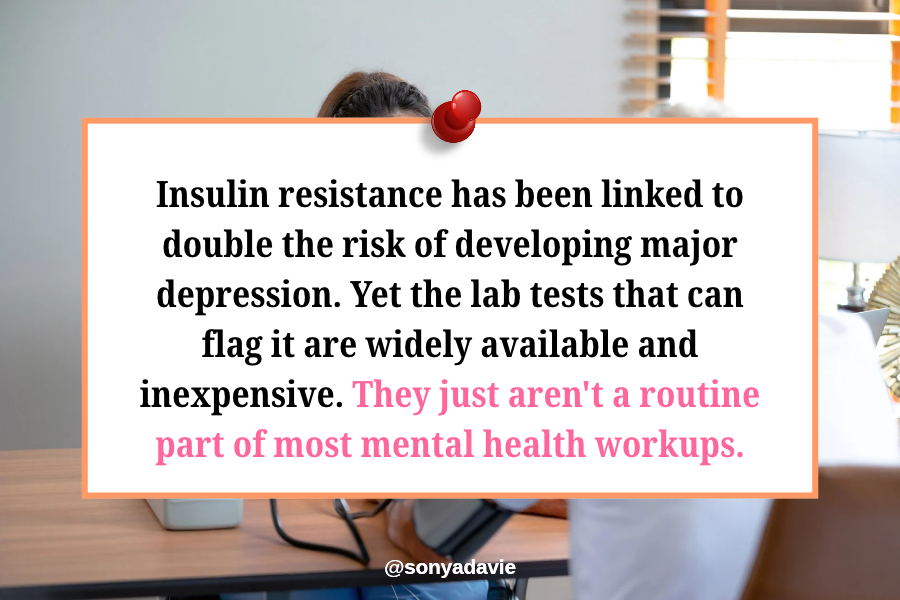
They simply aren’t routinely part of most mental health evaluations.
This is why metabolic psychiatry matters.
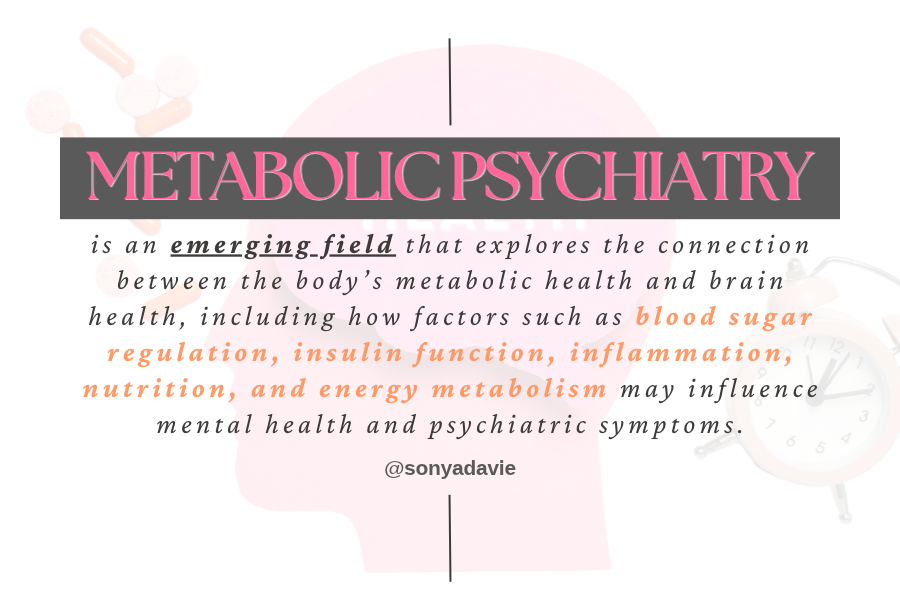
👉 It is an emerging field examining how the body’s energy systems, including insulin, blood sugar and inflammation, relate to brain health and mental illness.
Its core message is simple: the brain lives in a body, and it runs on fuel.
Why this matters?
In my practice, I often hear people say:
“I should be able to handle this.”
“Something must be wrong with me.”
“If I were stronger, I wouldn’t feel this way.”
So many people interpret mental health struggles as a personal failure or lack of discipline.
They turn that belief inward and become their own harshest critic.
Mental health is shaped by many things: life experiences, relationships, stress, grief, trauma and more. Biology is one important part of that picture, and it is only now beginning to get the attention it deserves.
Your brain is an organ.
Like your heart, lungs or liver, it has real physical needs: steady fuel, balanced hormones and a nervous system that isn’t stuck in survival mode.
When those needs aren’t met, mood, motivation and focus can suffer. That isn’t because you failed. It’s because a biological system is under strain.
Understanding this doesn’t erase the other parts of mental health. They still matter deeply. But it can replace self-blame with curiosity.
Instead of “What’s wrong with me?” you can start asking “What does my brain need?”
That shift alone can change everything that comes next.
To see why, let’s look at how your brain actually works, one piece at a time.
Step 1: Your brain is an energy-hungry organ
Your brain is only about 2% of your body weight, yet it uses roughly 20% of your body’s energy. It is one of the body’s most energy-demanding organs.
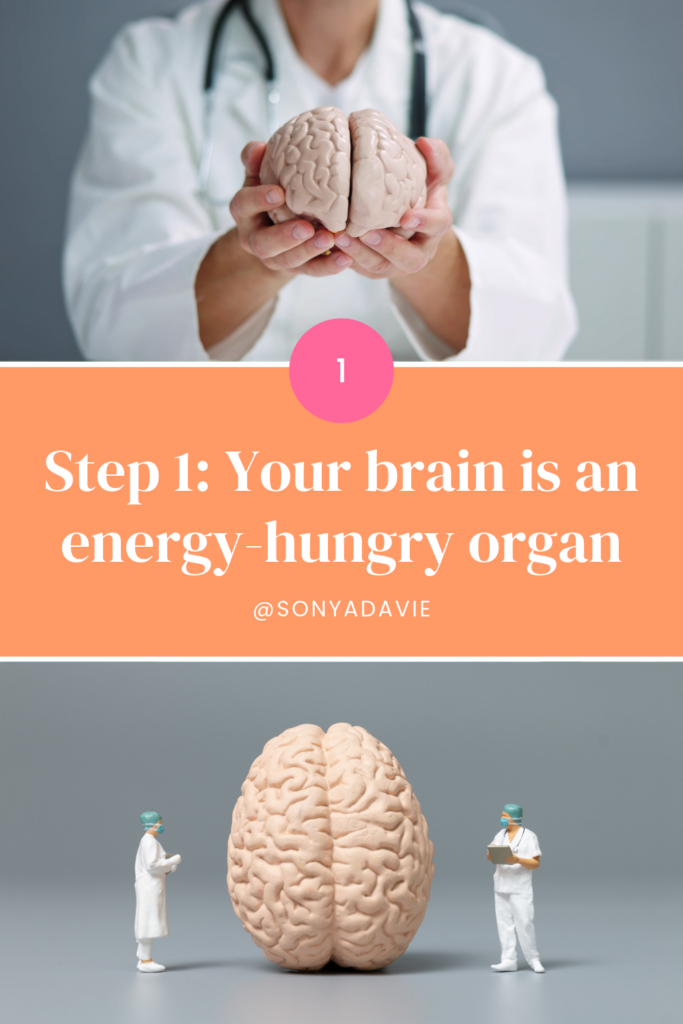
Your brain doesn’t just like steady fuel. It needs it. When fuel regulation is disrupted, you may notice fatigue, brain fog, irritability or changes in mood and motivation.
Step 2: How insulin is supposed to work
Here’s the simple version:
- You eat. Carbohydrates break down into glucose, the sugar your body uses for energy.
- Your pancreas responds. It releases insulin, a hormone that helps manage blood sugar.
- Insulin acts like a key. It helps glucose move from the blood into cells.
- Blood sugar settles. Your body can access energy more steadily.
That’s the system working as intended.
Step 3: What insulin resistance changes
With insulin resistance, cells become less responsive to insulin.
👉 Your pancreas pumps out more and more insulin to force the message through. This is called hyperinsulinemia, meaning too much insulin in the blood.
👉 Your blood sugar can swing up and down through the day. Many people feel those swings as crashes, fog and urgent cravings.
👉 Over time, the system wears down. This can lead to prediabetes, where blood sugar is higher than normal but not yet in the diabetes range, and then to type 2 diabetes.
Here’s the part most people don’t know:
At least 1 in 3 people are walking around with insulin resistance, and many have no idea. It can build quietly for years before a blood sugar test ever looks abnormal.
Step 4: What insulin resistance may mean for the brain
Insulin isn’t only a blood sugar manager. In the brain, it also acts as a messenger. Insulin binds to receptors throughout the brain, including the hippocampus, hypothalamus, amygdala and cortex. You can think of these receptors as “docking stations.”
When those signals get disrupted, three things you feel every day are affected:
Motivation and pleasure
Insulin signaling interacts with dopamine pathways involved in motivation and reward. Research suggests impaired insulin signaling may affect these pathways and potentially contribute to anhedonia, the loss of interest or pleasure.
Hunger and fullness
The hypothalamus helps regulate appetite and energy balance. Insulin is part of the signaling system that tells the brain about available energy and fullness. Research suggests brain insulin resistance may affect eating behavior and emotional regulation.
Memory and focus
The hippocampus plays a major role in learning and memory. Research has linked insulin resistance with changes in brain structure and with more severe depressive symptoms in some populations.
Put those pieces together and a pattern can emerge: low drive, persistent cravings and afternoon brain fog.
That pattern deserves curiosity, not self-blame.
Step 5: Why consistent fuel matters!
A brain this energy-hungry benefits from consistent nourishment. Much of the modern diet, however, makes that difficult.
Ultra-processed foods are industrially made products built from refined starches, added sugars, industrial oils and additives. Think packaged snacks, sodas, fast food and many “grab-and-go” options. They tend to spike blood sugar quickly and then let it crash, putting the brain on a rollercoaster.
The research is hard to ignore:
- A meta-analysis of more than 385,000 people found that eating more ultra-processed food was tied to a 22% higher risk of developing depression later on.
- Higher ultra-processed food intake was also linked to a 74% higher risk of type 2 diabetes.
- Researchers point to several possible reasons: blood sugar swings, inflammation, nutrient gaps, and disruption of the gut microbiome, the community of bacteria living in your digestive tract.
These studies show associations, not proof of direct causation, but the pattern is worth paying attention to.
👉 For busy professionals, the day often looks like this.
You skip breakfast and run on coffee. You grab something packaged between meetings. Then you eat a big dinner late at night. That’s inconsistent fuel from low-quality sources, delivered to the organ that needs steadiness most.
And “steady” doesn’t look the same for everyone. That’s where most generic nutrition advice falls apart.
Step 6: Chronic stress changes the picture
You can’t talk honestly about insulin resistance without talking about stress.
Here’s how it unfolds:
- Stress hits. Your brain triggers the release of cortisol, your main stress hormone.
- Cortisol raises blood sugar. It tells your body to release stored sugar so you have fuel to fight or flee.
- Short-term, that’s healthy. When the stressor passes, cortisol drops and the system resets.
- Chronic stress breaks the reset. The body’s “off switch” for stress can stop working properly. Cortisol, stress hormones and inflammatory markers stay elevated.
- Cortisol works against insulin. High cortisol directly drives hyperglycemia, meaning high blood sugar, and pushes the body toward insulin resistance.
- The pancreas works overtime. And the cycle deepens.
👉 The cycle runs both ways.
Multiple studies have shown that depression increases the risk of worsening insulin resistance and type 2 diabetes.
So you could eat “perfectly” and still struggle. Food alone can’t undo a nervous system that’s been stuck on high alert for months or years.
Step 7: Mental health research is catching up
This isn’t fringe science. Major psychiatric research is connecting the dots:
- In a Stanford-led study, insulin resistance measures predicted who developed major depression over nine years. None of the participants had a history of depression or anxiety at the start.
- People with major depression were 51% more likely to have insulin resistance. Insulin resistance was also linked to more severe and longer-lasting depression.
- A large meta-analysis found that insulin levels didn’t change even after successful antidepressant treatment. Mood can improve while the metabolic driver stays put.
Why Metabolic Psychiatry can’t wait
Remember the gap we started with? Here’s why closing it matters now:
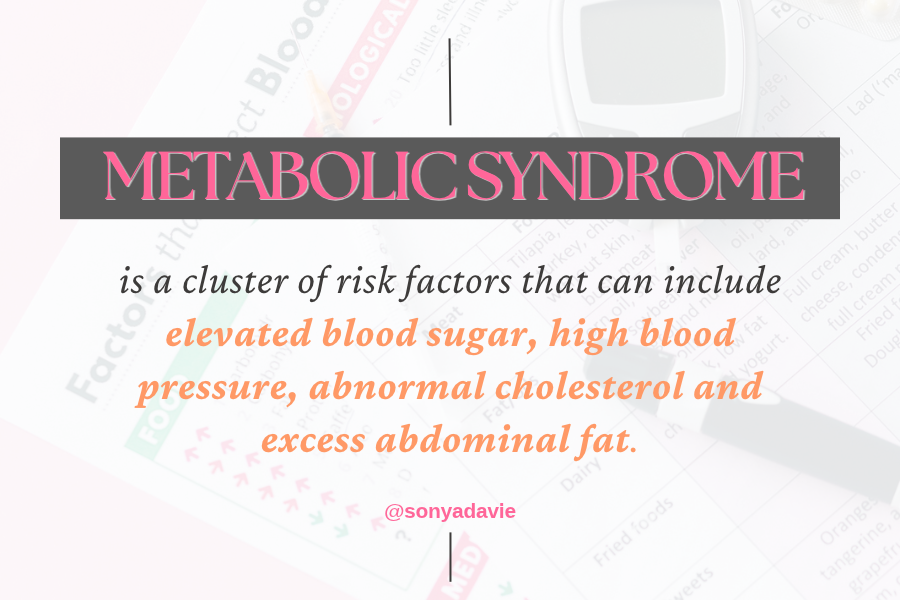
- The overlap is too big to ignore. People with serious mental illness are far more likely to have metabolic syndrome, impaired glucose tolerance and elevated insulin.
- Some treatments add to the problem. Many psychiatric medications can worsen these metabolic risks. That creates a cycle where treatment for emotional suffering adds physical strain.
- The cause may run both ways. Growing evidence suggests metabolic problems may help cause or sustain psychiatric symptoms, not just result from them.
- The field is gaining serious recognition. In 2025, Nature Mental Health published a commentary defining metabolic psychiatry as an emerging field and laying out its research priorities.
- Care hasn’t caught up yet. Providers offering metabolic psychiatry are still hard to find, though universities are starting to launch clinician training programs.
For decades, mental health care has focused almost entirely on brain chemistry and psychology.
Metabolic psychiatry adds the missing piece.
Until it becomes standard care, many people will keep being treated for symptoms while the fuel problem underneath goes unchecked.
Why better conversations with your doctor matter!
Until metabolic psychiatry becomes standard care, one of the most powerful tools you have is the conversation in the exam room.
Most appointments are short. Your clinician is juggling a questionnaire, your history, a medication decision and a clock. If you walk in saying only “I’ve been feeling down and tired,” you’ll likely get the standard answer.

But you’re the one who lives in your body every day.
You notice the 3 p.m. crash, the cravings, the fog after a stressful week, the way your mood shifts with how you’ve eaten. That information is valuable, and it often never makes it into the visit.
Better conversations matter because they:
- Connect the dots. When you describe patterns instead of isolated symptoms, your clinician can see a fuller picture.
- Open the door to the metabolic side. Many clinicians are open to exploring it. They just need a reason to go there.
- Support informed consent. Before starting or changing a psychiatric medication, you deserve to understand your options, the risks and what else might be contributing. Informed consent means you know enough about all of that to make the decision with your clinician.
- Make you a partner, not a passenger. Shared decision-making is the approach where you and your clinician weigh options together. It only works when you come prepared to take part.
Knowing what to ask is a start. Knowing how to bring your own patterns into a short appointment clearly and confidently is a skill, and most of us were never taught it.
What this is not…
This is not anti-medication and it is not anti-doctor.
Psychiatric medications help many people. This is also not a claim that every mental health struggle is caused by metabolism.
A full clinical evaluation is always important.
The point is simpler: metabolic health has been an overlooked part of many mental health conversations, and your brain deserves to have that piece considered.
Seeing the problem is the first step!
If this sounds like your afternoons, cravings or stress, you’re not lazy and you’re not broken.
Your symptoms are information.
Your brain may be telling you it needs steadier fuel and a calmer system.
👉 Understanding the problem is where change begins. Actually shifting it takes more than information. It takes the right structure, the right order of change and the right support.
Ask better questions. Track what you notice. Look at the whole picture.
More on that soon.
Tools to support lifestyle medicine for your mental health!
Lifestyle medicine uses evidence-based approaches such as nutrition, movement, sleep, stress management and connection as part of care.
These tools are not cures, but they can support healthy routines alongside guidance from your healthcare team.
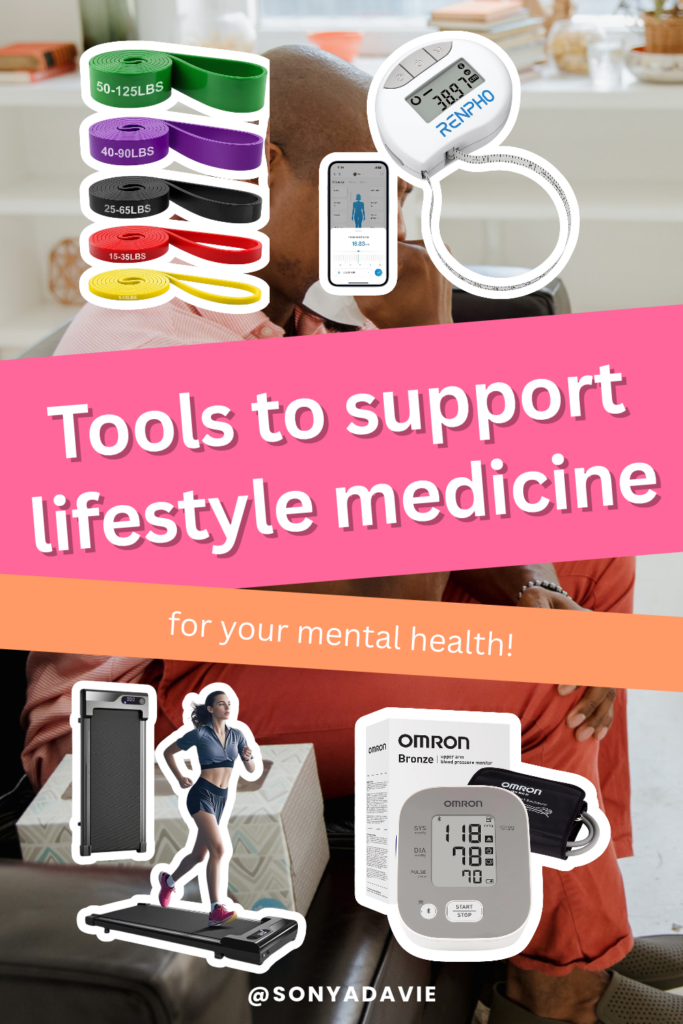
Fit Simplify Resistance Loop Bands (Set of 5): Beginner-friendly strength training you can do at home. Muscle is an important site of glucose use.
Body Measuring Tape: Waist measurement can be one piece of metabolic health information to discuss with your clinician.
OMRON Upper Arm Blood Pressure Monitor: Home blood pressure readings can provide additional information for your care team.
Walking Pad: An under-desk treadmill that can make movement easier on desk-heavy days.
Affiliate disclosure: As an Amazon Associate, I earn from qualifying purchases. This comes at no extra cost to you, and I only recommend products that fit my clinical approach.
Disclaimer: This post is for educational purposes and is not medical advice. Please talk with your healthcare provider before making changes to your treatment, medications, diet or exercise routine.
References
Watson KT, et al. Incident major depressive disorder predicted by three measures of insulin resistance: a Dutch cohort study. American Journal of Psychiatry. 2021.
Fernandes BS, et al. Insulin resistance in depression: a large meta-analysis of metabolic parameters and variation. Neuroscience & Biobehavioral Reviews. 2022;139:104758.
Lane MM, et al. Ultra-processed food consumption and mental health: a systematic review and meta-analysis of observational studies. Nutrients. 2022;14(13):2568.
Delpino FM, et al. Ultra-processed food consumption and adult diabetes risk: a systematic review and dose-response meta-analysis. Nutrients. 2021.
Joseph JJ, Golden SH. Cortisol dysregulation: the bidirectional link between stress, depression, and type 2 diabetes mellitus. Annals of the New York Academy of Sciences. 2017.
Kullmann S, et al. Brain insulin resistance at the crossroads of metabolic and cognitive disorders in humans. Physiological Reviews. 2016.
Kleinridders A, Pothos EN. Impact of brain insulin signaling on dopamine function, food intake, reward, and emotional behavior. Current Nutrition Reports. 2019.
Mudra Rakshasa-Loots A, et al. Metabolic psychiatry: key priorities for an emerging field. Nature Mental Health. 2025;3:855–858.





+ show Comments
- Hide Comments
add a comment