


By Sonya Davie, LMHC, INHC, CMHIMP · Founder, Sonya Davie Wellness
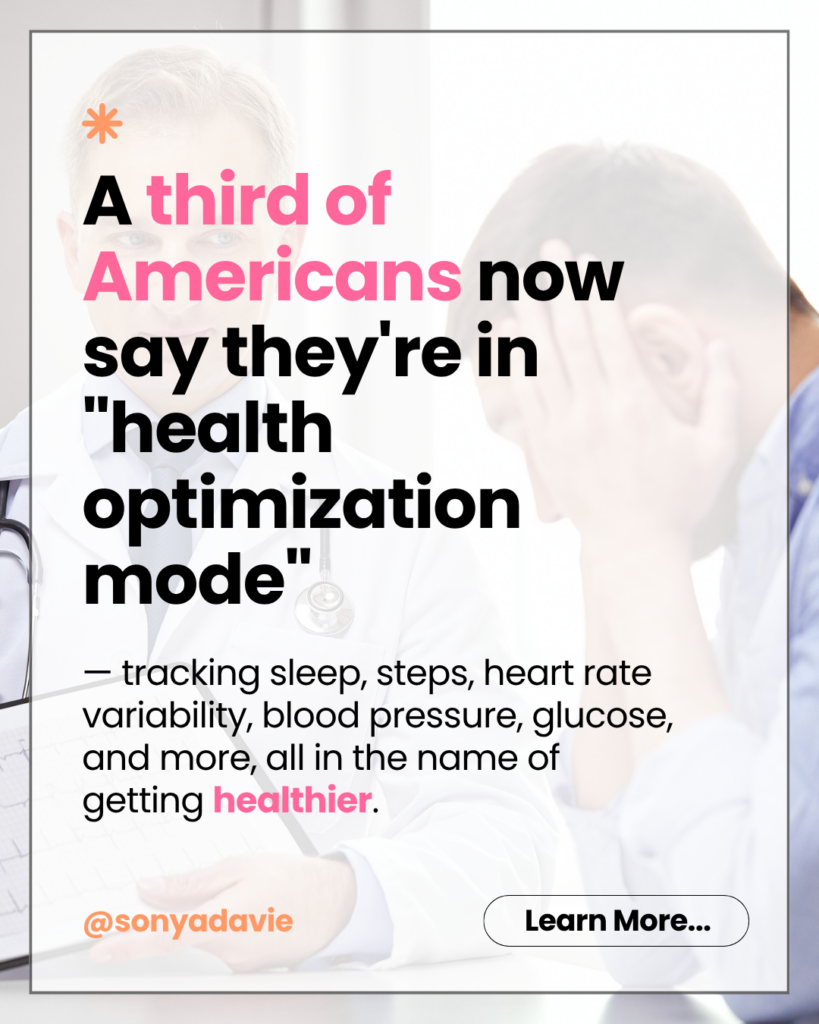
A third of Americans now say they’re in “health optimization mode” — tracking sleep, steps, heart rate variability, blood pressure, glucose, and more, all in the name of getting healthier. (Source)
Smartphones and wearables have made this easier than ever. They’ve also made it easier than ever to overdose on your own data.
As a psychiatric provider, I see the fallout from this trend more often than you’d think.
Patients come in convinced something is medically wrong with them because a number on a screen looked “off” — when what’s actually happening is a feedback loop between anxiety and obsessive checking.
So let’s talk about where the line is, because “paying attention to your health” and “being controlled by your health data” are two very different things.
Tracking Isn’t the Problem — Compulsion Is
There’s nothing inherently wrong with monitoring your health. Tracking can help you and your healthcare provider identify patterns and make more informed decisions.
The trouble starts when tracking shifts from informative to compulsive:
- When a number controls your mood.
- When it changes your plans for the day.
- When you can’t make a decision without checking first.
- When you check out of fear rather than curiosity.
That’s the distinction doctors who work with “optimization-minded” patients are starting to flag.
The question isn’t simply “Are you tracking your health?”
It’s “Is tracking your health running your life?”
The Sleep Score Trap: Orthosomnia
Here’s the irony that gets me every time:
Trying too hard to achieve “perfect” sleep can make sleep itself another source of anxiety.
There’s even a term for the phenomenon: Orthosomnia.
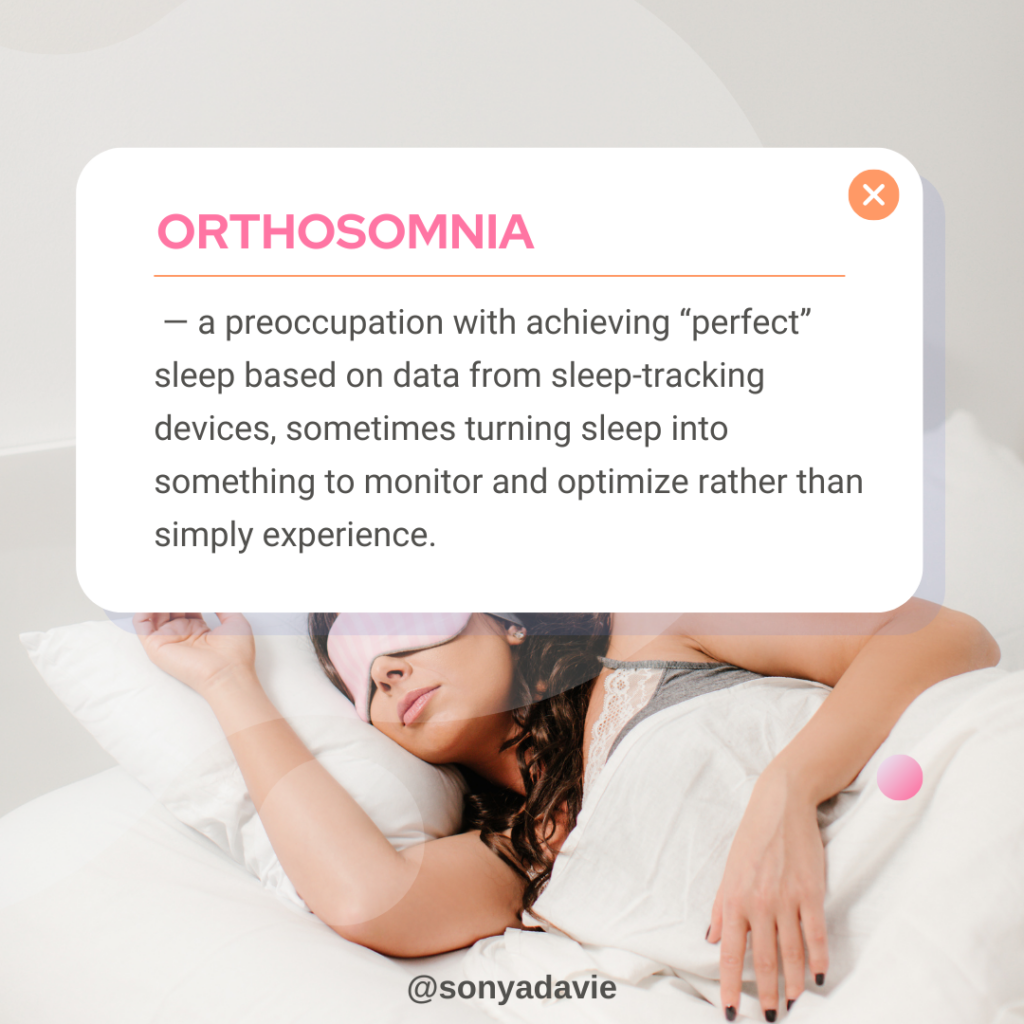
Researchers have documented the phenomenon, and newer research continues to examine the anxiety that can arise around sleep-tracker data.
The cycle can look something like this:
Your sleep score is low → you worry about your sleep → you check your data more closely → you become more focused on getting the “right” amount of sleep → sleep becomes something you feel you have to perform.
The tool meant to help you sleep can become another reason you’re thinking about sleep.
And that’s the part worth noticing.
The Blood Pressure Spiral
This pattern can show up constantly with blood-pressure monitoring, too.
A patient checks their BP once, maybe twice a day, sometimes logging it by hand, sometimes in a spreadsheet. Then one reading comes back higher than usual.
Panic sets in. They check again. And again.
They start wondering whether something was missed.
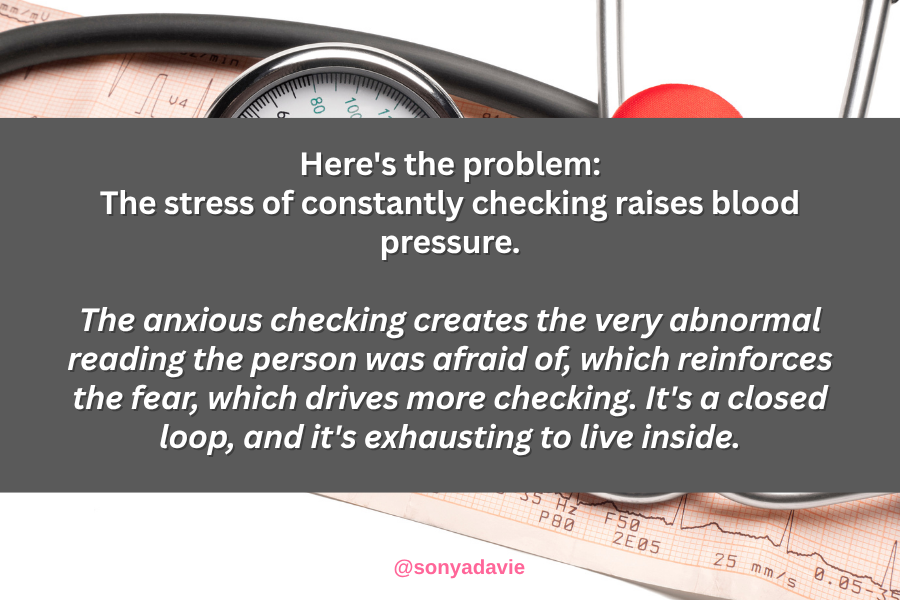
The problem isn’t that blood pressure should be ignored. It shouldn’t.
Home blood-pressure monitoring can be useful, and clinicians often use repeated measurements and out-of-office readings to get a better picture of someone’s blood pressure. At the same time, blood pressure naturally varies, and anxiety and measurement circumstances can affect readings.
So a single reading that’s a little “off” isn’t automatically a reason to panic.
What gets lost in all of this is that your body’s numbers are supposed to fluctuate.
Blood pressure, heart rate, glucose, sleep quality, energy, these can all change from day to day depending on what’s happening in your body and your environment.
The goal isn’t to eliminate every fluctuation.
It’s to understand the pattern.
It’s Not Just Devices — It’s the Supplement Market, Too
The optimization mindset doesn’t stop with wearables. It has also contributed to growing interest in supplements, peptides, powders, and other products marketed as ways to improve health, energy, longevity, performance, or resilience.
Some of these products are promoted heavily online, sometimes by influencers whose expertise may not include medical training. Personal testimonials can sound convincing, but they aren’t a substitute for clinical evidence or individualized medical advice.
And this is where we need to be careful.
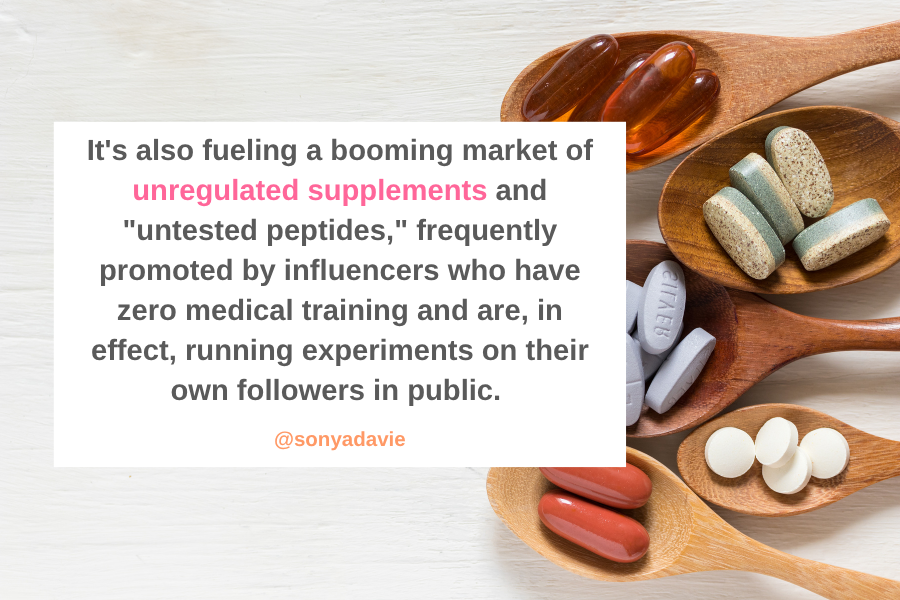
In the U.S., dietary supplements are not approved by the FDA for safety and effectiveness before they are marketed, unlike new drugs, which generally undergo FDA review and approval before marketing. The FDA also recommends talking with a healthcare professional before taking supplements, particularly because some can interact with medications or other supplements.
That doesn’t mean supplements are inherently bad.
It means “natural,” “clinically inspired,” or heavily promoted online doesn’t automatically mean proven, appropriate, or safe for you.
And for someone who is already anxious about their health, the constant stream of products promising greater control can create even more things to research, monitor, and worry about.
Sometimes, the pursuit of optimization doesn’t reduce health anxiety. It gives it more to obsess over.
Where the Line Actually Is
If tracking your health data leaves you feeling more informed and more in control, it’s probably doing what you want it to do.
But if it leaves you feeling:
- more anxious
- more fixated
- constantly worried that something is wrong
- unable to make a decision without checking a number
- or afraid to deviate from your routine
… it may be time to step back.
Because at that point, the question isn’t really about the data anymore.
It’s about your relationship with the data.
For someone caught in a checking-and-anxiety cycle, the answer isn’t necessarily more information. Sometimes it’s less.
That might mean stepping away from tracking temporarily, following a specific monitoring schedule recommended by your provider rather than repeatedly checking, and focusing on meaningful trends instead of reacting to every single data point.
My Final Take on This…
Wanting to be healthy is a good instinct. But when a smartwatch, a spreadsheet, or a supplement stack starts dictating your emotional state day to day, that’s no longer simply health optimization.
It’s a sign that your relationship with health may be creating distress of its own.
And that deserves attention, not to be brushed off as “just being health-conscious.”
Because sometimes, in our attempt to gain more control over our health, we accidentally give our health data more control over us.
If you’ve noticed your own tracking habits tipping from helpful into anxious, that’s worth paying attention to.
And it may be worth talking through with a healthcare or mental-health professional who can help you find the line between being informed about your health and being consumed by it.




+ show Comments
- Hide Comments
add a comment