


By Sonya Davie, LMHC, INHC, CMHIMP · Founder, Sonya Davie Wellness
Over the years in my practice, I’ve noticed a pattern that used to unsettle me, and now drives a lot of how I work with clients.
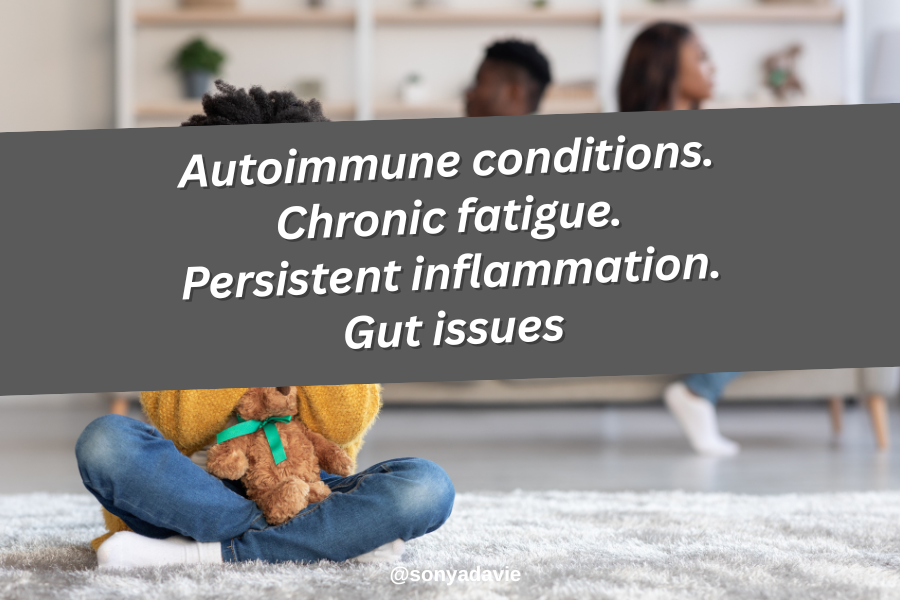
Time and again, I’ve sat with people carrying unresolved trauma, only to see that same trauma resurface years later, not just emotionally, but physically. Autoimmune conditions. Chronic fatigue. Persistent inflammation. Gut issues that no specialist could quite pin down.
The nervous system doesn’t just “get over” trauma. It often keeps score, and the body eventually presents the bill.
This is one of the biggest reasons I teach lifestyle medicine as part of mental health treatment, not as an add-on.
Understanding why this happens starts with a field called epigenetics, and once you get it, it changes how you think about healing.
So, what exactly is epigenetics?
Imagine your DNA as a massive cookbook filled with thousands of recipes. You’re born with that cookbook, and the recipes themselves don’t change.
But…
Epigenetics is like a collection of sticky notes placed throughout the book:
“Use this recipe more often.” “Skip this one for now.” “Only make this when things get stressful.”

Your genes are the recipes. Your life experiences including stress, nutrition, sleep, movement, relationships, and even aspects of your environment, help determine which recipes get used more often and which stay quiet.
Here’s the hopeful part: those sticky notes aren’t permanent.
Gene activity can change over time in response to your experiences and daily habits. That’s why healing after trauma isn’t just wishful thinking, it’s grounded in biology.
What does trauma actually do to your body?
Trauma isn’t only a memory or an emotion, it can leave lasting biological effects.
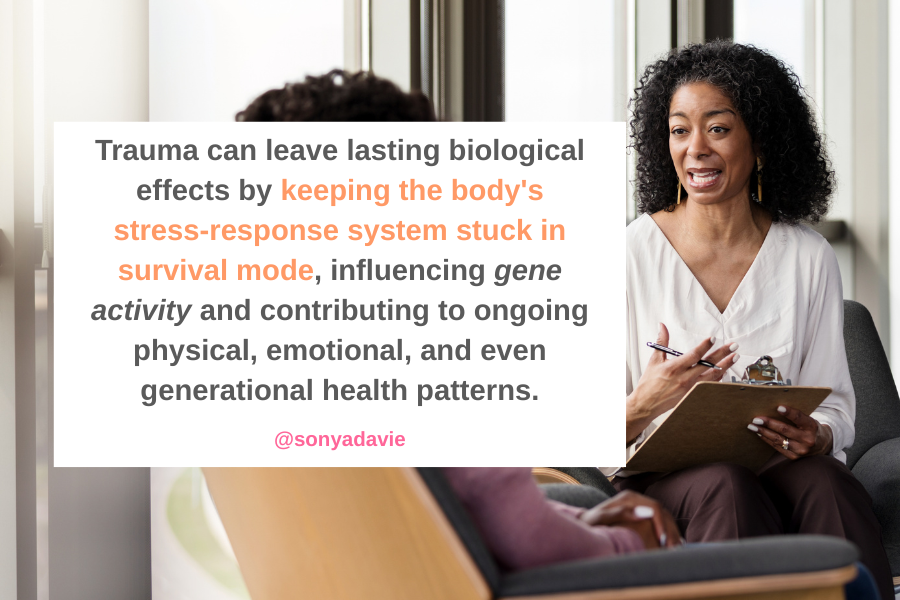
When someone experiences trauma, especially if it’s chronic or occurs early in life, the body’s stress-response system can become stuck in survival mode. Systems designed to protect us during danger may remain activated long after the threat has passed.
Research suggests that genes involved in stress regulation, inflammation, and nervous system activity can become more active under chronic stress. (Source)
This may help explain why so many trauma survivors describe feeling constantly wired, exhausted, hypervigilant, or emotionally numb, even when life appears safe from the outside.
Their body is still responding as though danger is nearby.
In some cases, this pattern can even be passed down to the next generation, part of what we mean by generational trauma.
Why does chronic stress make healing so difficult?
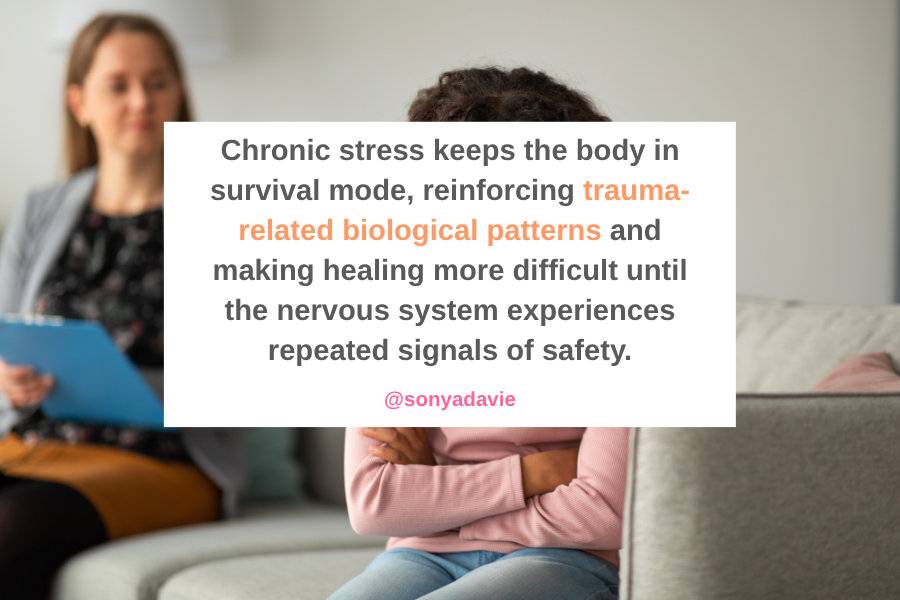
Chronic stress keeps the body locked in high-alert mode.
Cortisol stays elevated. Sleep, digestion, immunity, and mood regulation all take a hit.
And even in a therapy session or a moment meant for rest, it can be hard actually to feel safe.
Research in psychoneuroimmunology backs this up: long-term stress can increase inflammation, slow healing, and worsen both physical and mental health outcomes.
From an epigenetic lens, ongoing stress continues reinforcing many of the same biological patterns that trauma helped establish in the first place.
This is why “just talking about it” isn’t always enough. Insight is valuable. But if the body is still living in a stress loop, the nervous system needs direct, physical signals of safety, not just understanding.
Lifestyle medicine: Sending new messages to your genes!
This is where lifestyle medicine becomes so powerful, not as wellness fluff, but as an evidence-informed mental health intervention.
Nutrition, movement, sleep, stress management, and meaningful connection aren’t simply healthy habits. They provide your body with repeated signals that support regulation, resilience, and repair.
#1 Calming the nervous system
Practices like slow breathing, mindfulness, grounding exercises, dancing, and spending time in nature repeatedly communicate one simple message to your body: “You’re safe now.” Repeated often enough, that message shows up in your actual gene expression.
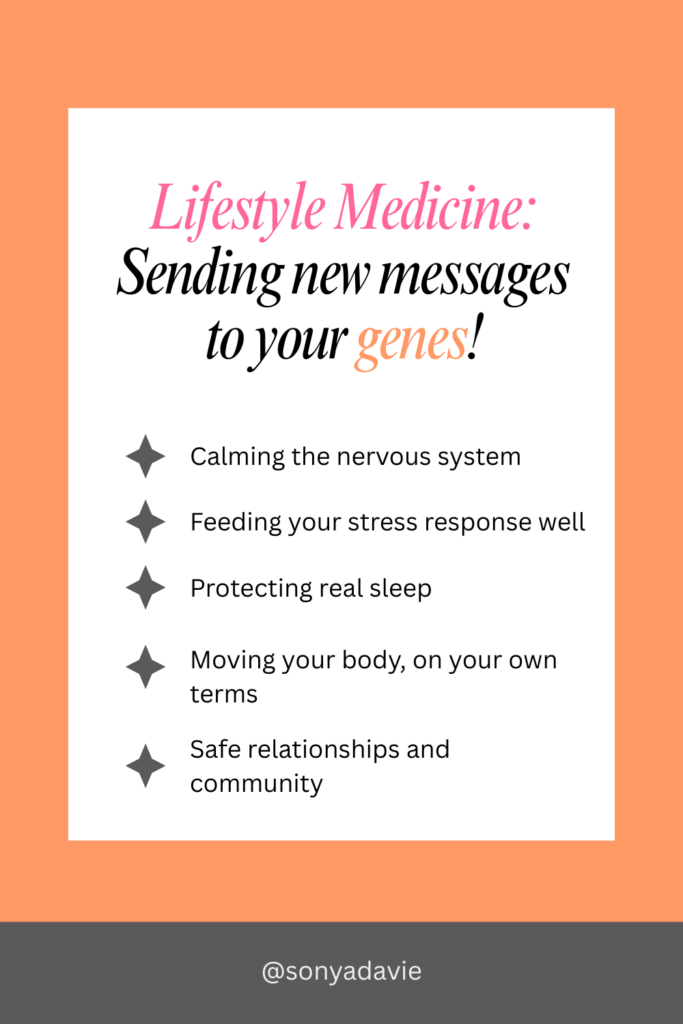
#2 Feeding your stress response well
Balanced meals, colorful whole foods, and key nutrients like omega-3s, B vitamins, and magnesium give your brain and body the raw materials to regulate stress and mood instead of staying in emergency mode.
#3 Protecting real sleep
Consistent, restorative sleep is one of the most underrated tools for resetting cortisol rhythms and helping the brain process what it’s been through.
#4 Moving your body, on your own terms
Walking, dancing, yoga, and other embodied movement discharge stored tension and support neuroplasticity. For trauma survivors, this only works when movement is chosen, not forced, agency matters as much as the activity itself.
#5 Safe relationships and community
Feeling seen and believed by other people is one of the most powerful regulators there is. Safe connection tells your nervous system, “You’re not alone anymore”… and that message is deeply healing at a biological level.
My final thoughts….
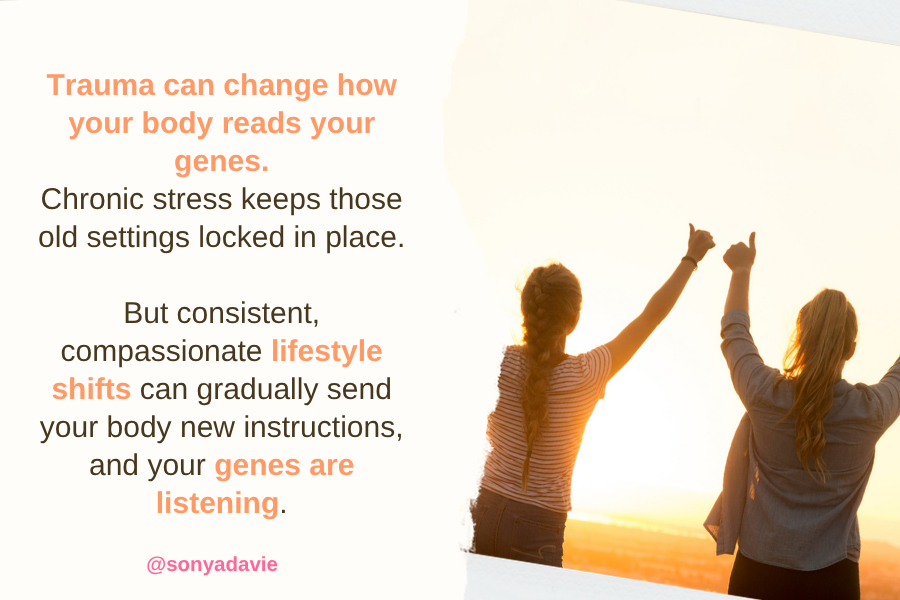
Trauma can influence how your body regulates the activity of certain genes. Chronic stress can reinforce those patterns over time.
But the story doesn’t end there.
Consistent, compassionate lifestyle habits can begin sending your body new signals… signals that support regulation, recovery, and resilience.
Healing isn’t about perfection.
It’s about offering your nervous system small, repeatable experiences of safety every single day.
Every slow breath. Every nourishing meal. Every restorative night’s sleep. Every meaningful connection.
Little by little, your body begins to receive a different message:
We’re safe now. We’re healing now.
And if any of this feels familiar, if you’ve spent years living in survival mode, running on empty, or wondering why your body still feels stuck even after doing the emotional work… that’s exactly why I created the Stress Recovery Toolkit.
It’s a step-by-step way to understand what’s happening in your body, learn real trauma-informed tools you can use immediately, and build a routine that supports your nervous system instead of adding one more thing to your plate.





+ show Comments
- Hide Comments
add a comment