


By Sonya Davie, LMHC, INHC, CMHIMP · Founder, Sonya Davie Wellness
Most men who end up in my (virtual) office for “anger issues” never describe themselves as sensitive.
Instead, they tell me they’re stressed. Irritable. Burned out. Constantly on edge. One inconvenience away from snapping.
They’ll talk about feeling overwhelmed at work, exhausted by family demands, frustrated in their relationships, or like they can never quite relax. But beneath the anger, I often see something else entirely:
A highly sensitive nervous system that has spent years being misunderstood, dismissed, and pushed beyond its limits.
They’ve learned to hide their sensitivity so well that many don’t even realize it’s there.
After years of working with highly sensitive women, and nearly a decade facilitating anger management groups for men, I’ve become convinced of two things:
- Many men are highly sensitive without ever realizing it.
- Our culture’s tendency to shame sensitivity in men quietly fuels anger, emotional shutdown, burnout, depression, and poor mental health.
In this post, I’ll help you explore what it really means to be a Highly Sensitive Person (HSP), what researchers call sensory processing sensitivity (SPS), why so many men never recognize this trait in themselves, and how unrecognized sensitivity often shows up as anger instead of vulnerability.
What Is a Highly Sensitive Man, Really?
“Highly sensitive” does not mean weak, dramatic, or fragile.
In psychology, the scientific term is sensory processing sensitivity (SPS), a biologically based temperament trait found in approximately 15–30% of the population.
👉 (You can read my HSP Corner here)
People high in SPS tend to:
- Process information and emotions more deeply
- Notice subtle details others often miss
- Experience stronger emotional responses — both positive and negative
- Become overstimulated more easily by noise, conflict, crowds, or too many demands
Recent research continues to support SPS as a normal variation in human temperament, not a disorder. Brain imaging studies and validated assessment tools developed by Elaine Aron and colleagues have consistently demonstrated that highly sensitive people process information differently than the average person. (Source)
That wiring can become an incredible strength in the right environment.
But when it’s constantly invalidated, overwhelmed, or forced to “toughen up,” it can become a significant source of emotional suffering.
Why So Many Men Reject the Word “Sensitive”
Here’s where things get complicated. Science uses a neutral term:
Sensory Processing Sensitivity.
Culture says something very different.
“You’re too sensitive.”
“Man up.”
“Stop crying.”
“Toughen up.”
For many boys, these messages begin early in life.
If you’re naturally wired to feel deeply, notice everything around you, or become overwhelmed more easily than your peers, you quickly learn that something about you is “wrong.”
By adulthood, that often looks like:
- Avoiding words like sensitive, emotional, or overwhelmed
- Questioning your own reactions: “Maybe I’m just weak.”
- Hiding emotions behind perfectionism, stoicism, overworking, or anger
Research also tells us that people with higher levels of sensory processing sensitivity are more likely to experience anxiety, depression, stress-related symptoms, and physical health complaints, particularly when they’re living in harsh or invalidating environments.
So we end up with many highly sensitive men who:
- Feel more
- Carry more stress
- Experience greater emotional strain
- And have been taught to say nothing about it
That pressure doesn’t disappear. It has to go somewhere.
From Overstimulation to Outbursts: Understanding the Anger Pathway
One of the most important developments in recent research is the clear connection scientists are making among sensory sensitivity, chronic overstimulation, and mental health.
Although many of these studies aren’t focused exclusively on men, what they describe looks remarkably similar to what I see every week in anger management work.
#1 A Nervous System That’s Always “On”
Highly sensitive people become overstimulated more quickly by:
- Loud or chaotic environments
- Constant interruptions
- Emotional conflict—even when nothing is being said out loud
- Multitasking
- Time pressure
- Being constantly available through phones and technology
A 2025 study found that everyday experiences like noise, social overload, and emotional conflict consistently increased feelings of overwhelm among individuals with higher SPS. Other studies have also linked high sensitivity with greater stress-related and physical symptoms, independent of personality traits like neuroticism. (Source)
In practical terms, a highly sensitive man might spend the day juggling:
- A noisy open-plan office
- Constant emails and notifications
- A difficult commute
- Tension at home
- Endless news alerts and social media
His nervous system may already be overloaded long before the moment everyone identifies as “the reason he got angry.”
#2 When Overload Meets Traditional Masculinity
Research suggests that when sensory sensitivity is high and the environment is overwhelming, people are more likely to respond with reactive anger.
That doesn’t mean sensitivity causes violence.

It means an overloaded nervous system is more likely to switch into fight mode.
Now layer traditional masculine expectations on top:
- Don’t cry.
- Don’t admit fear.
- Don’t talk about being hurt.
- Stay strong.
When sadness, fear, embarrassment, or shame aren’t considered acceptable emotions, they don’t simply disappear. They often expressed as anger.
Clinically, that can look like:
- Explosive reactions over seemingly minor issues
- Road rage
- Verbal conflict in relationships
- Emotional shutdown followed by sudden outbursts
#3 The Hidden Cost: Anxiety, Depression, and Burnout
A large review of 33 studies found that higher sensitivity is consistently associated with anxiety and depression, particularly in stressful environments. (Source)
Other research has found that highly sensitive individuals report more mental and physical health complaints when exposed to chronic stress.
Men don’t always present with sadness. Instead, they often come in experiencing:
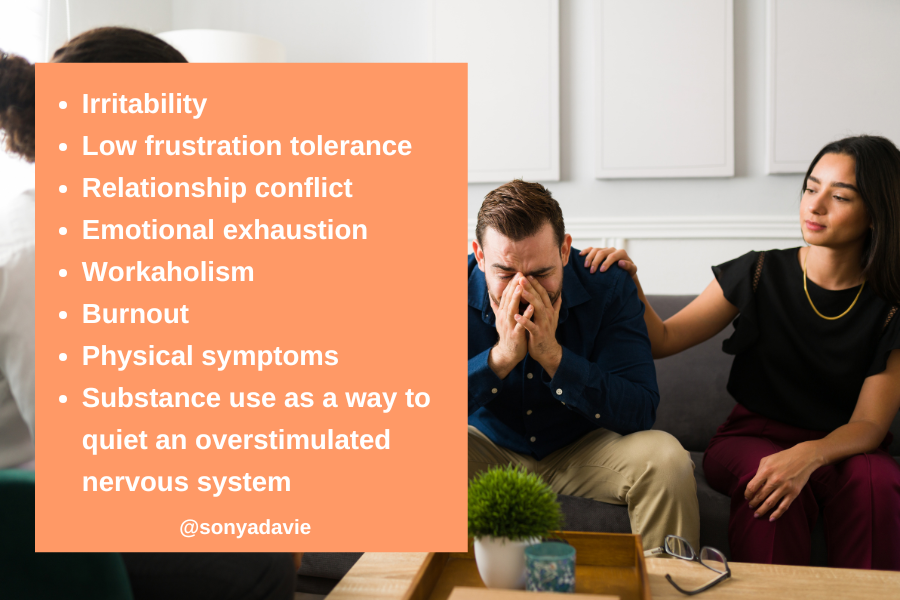
When we overlook the sensitivity underneath the anger, we risk treating only the behavior, not the biology, environment, and emotional experiences driving it.
Everyday Signs of a Highly Sensitive Man…
A highly sensitive man may never say,
“I think I have sensory processing sensitivity.”
But certain patterns tend to show up.

He may:
- Feel drained after spending time in loud or busy environments
- Need more downtime than friends or family members
- Feel emotionally exhausted after social interactions—even enjoyable ones
- Take criticism deeply and replay it for days
- Be deeply moved by music, movies, or meaningful conversations
- Notice subtle shifts in people’s moods
- Feel responsible for keeping the peace
- Snap after suppressing emotions for too long
None of these means something is wrong.
They simply point toward a nervous system that’s processing more than most people realize.
When Sensitivity Becomes a Superpower!
One of the most encouraging findings in sensitivity research is something called differential susceptibility.
That means:
In high-stress, emotionally invalidating environments, they’re more vulnerable to anxiety, depression, burnout, physical symptoms, and anger.
But in calm, emotionally healthy environments, they’re often exceptionally:
- Empathetic
- Intuitive
- Creative
- Thoughtful
- Insightful
- Compassionate leaders
The goal isn’t to become less sensitive. The goal is to understand your nervous system well enough that your sensitivity becomes one of your greatest strengths instead of one of your biggest struggles.
Practical Support for Highly Sensitive Men
1. Name the Trait
Learning about sensory processing sensitivity often brings relief. Having language for your experience reduces shame and makes your reactions easier to understand.
Explore the research. Take a validated HSP self-assessment. Talk with a trusted therapist or someone you feel safe opening up to.

2. Track Overstimulation, Not Just Anger
Instead of asking, “Why did I explode?”
Ask yourself:
- What was happening during the last 24–72 hours?
- How much sleep have I had?
- How much conflict have I been carrying?
- Was I constantly surrounded by noise or demands?
- What pushed my nervous system beyond its limit?
You’ll often discover the anger was simply the final straw.
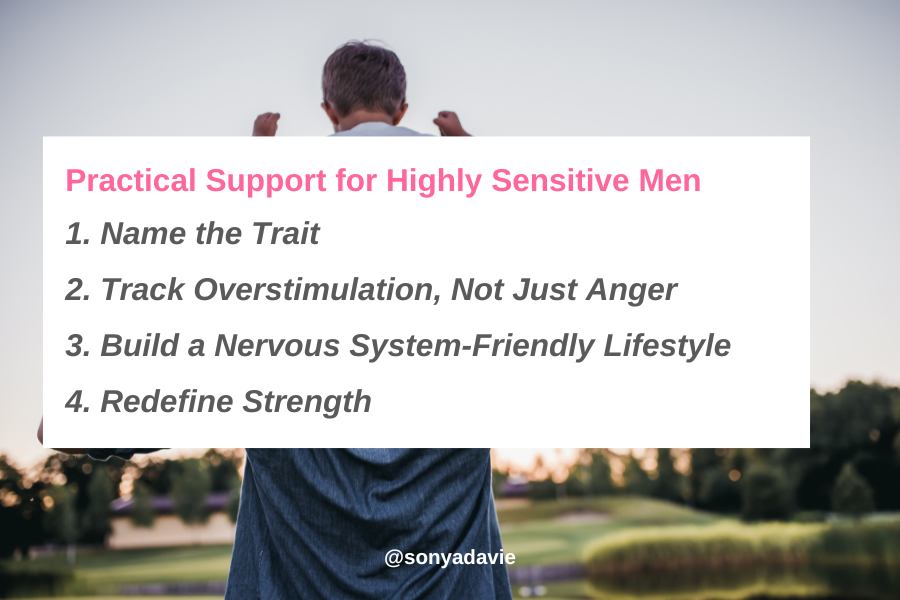
3. Build a Nervous System-Friendly Lifestyle
That may include:
- Quiet time every day
- Healthy boundaries with technology
- Less news and social media
- Walking
- Yoga
- Dance or other somatic movement
- Spending time in nature
This isn’t being “high maintenance.” It’s caring for a nervous system that naturally processes more information than average.
4. Redefine Strength
In reality, lasting strength looks much different. Strength is:
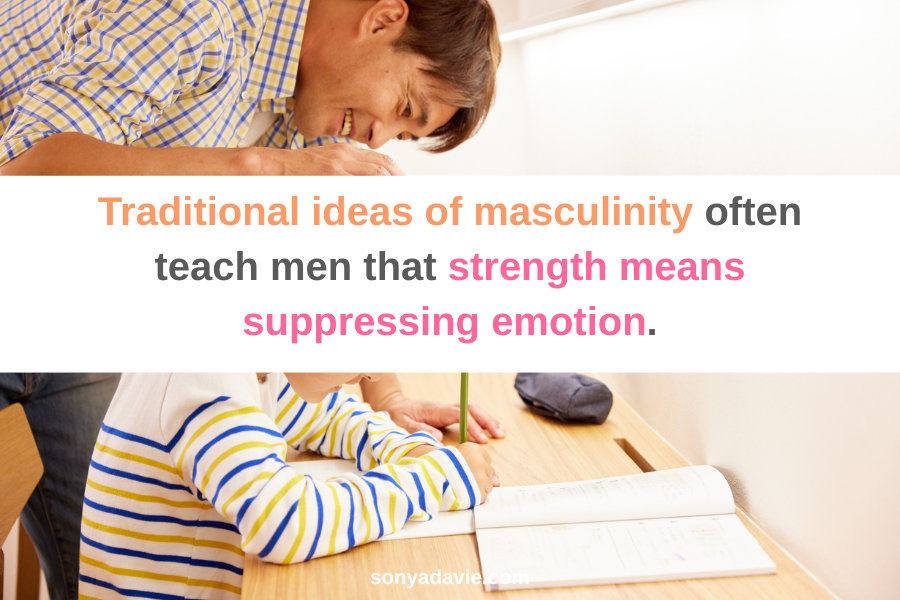
- Self-awareness
- Emotional regulation
- Knowing your limits
- Asking for support when you need it
- Choosing not to pass your pain on to others through anger
Those are skills. And they can be learned.
If This Resonates, You’re Not Alone!!!
If you’re reading this and thinking,
“This sounds like me…”
— or —
“This sounds exactly like someone I love…”
Know this: You’re not weak. You’re not “too much.”
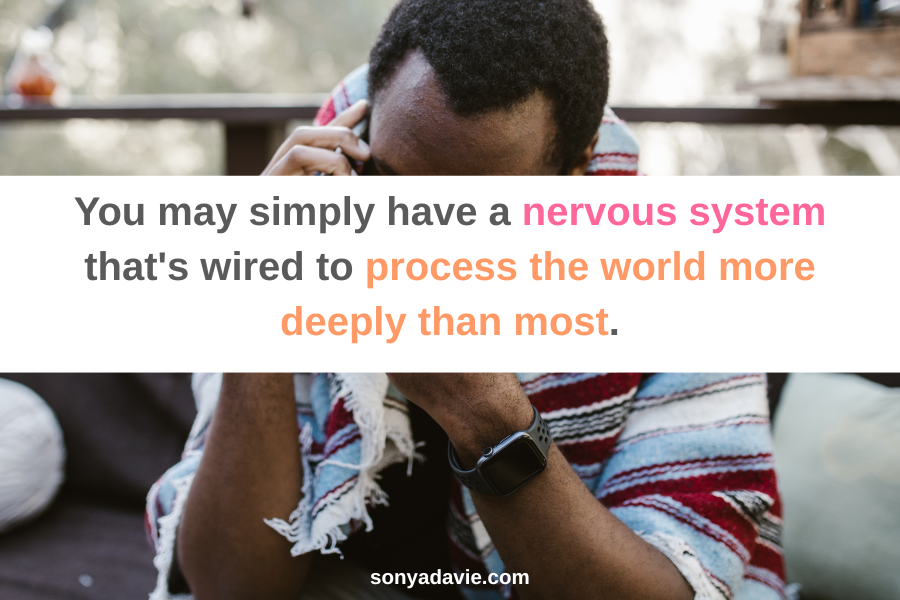
When that wiring is misunderstood, it can contribute to chronic stress, anxiety, burnout, depression, and anger.
But when it’s understood, respected, and supported, it can become one of your greatest strengths.
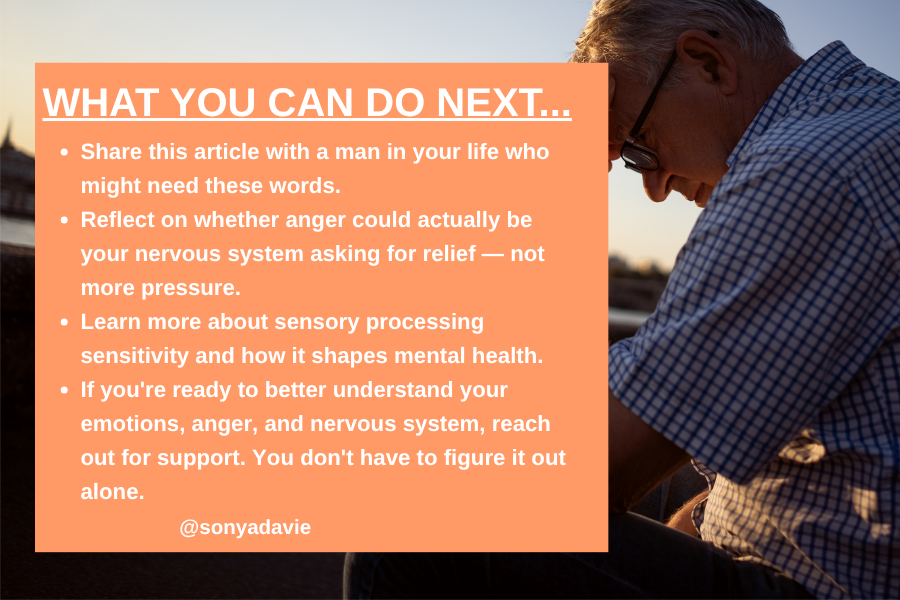
What You Can Do Next….
If this article resonated with you, here are a few next steps:
- Share this article with a man in your life who might need these words.
- Reflect on whether anger could actually be your nervous system asking for relief — not more pressure.
- Learn more about sensory processing sensitivity and how it shapes mental health.
- If you’re ready to better understand your emotions, anger, and nervous system, reach out for support. You don’t have to figure it out alone.
As a therapist who works with both Highly Sensitive Persons and men’s mental health, I’ve seen firsthand what happens when men finally understand that their sensitivity isn’t something to fight against, it’s something to work with.
Because healing doesn’t begin when you become someone else.
It begins when you finally understand who you’ve been all along.





+ show Comments
- Hide Comments
add a comment