


Sonya Davie, LMHC, INHC, CMHIMP
Licensed Psychotherapist, Certified Health Coach & Creator of Mental Wellness Lifestyle™
Paranoia. Hallucinations. Seizures. For five years, no one found the cause.
It turned out to be a deficiency of vitamin B12, an essential nutrient your brain depends on every day.
Welcome to Behind the Diagnosis, where we look at what might be hiding beneath your mental health symptoms.
Today, we’re exploring how a common, testable nutrient deficiency can show up as paranoia, why it can be overlooked, and what to ask your healthcare provider.

The Case That Took Five Years
A 2019 report in BMJ Case Reports describes a patient experiencing persecutory delusions, visual and auditory hallucinations, declining cognitive function, and seizures. (Source)
The underlying cause was pernicious anemia, an autoimmune condition that interferes with B12 absorption.
It took five years after symptoms began for the condition to be diagnosed, even though the patient had been receiving medical care. Why was it missed? The classic signs weren’t there.
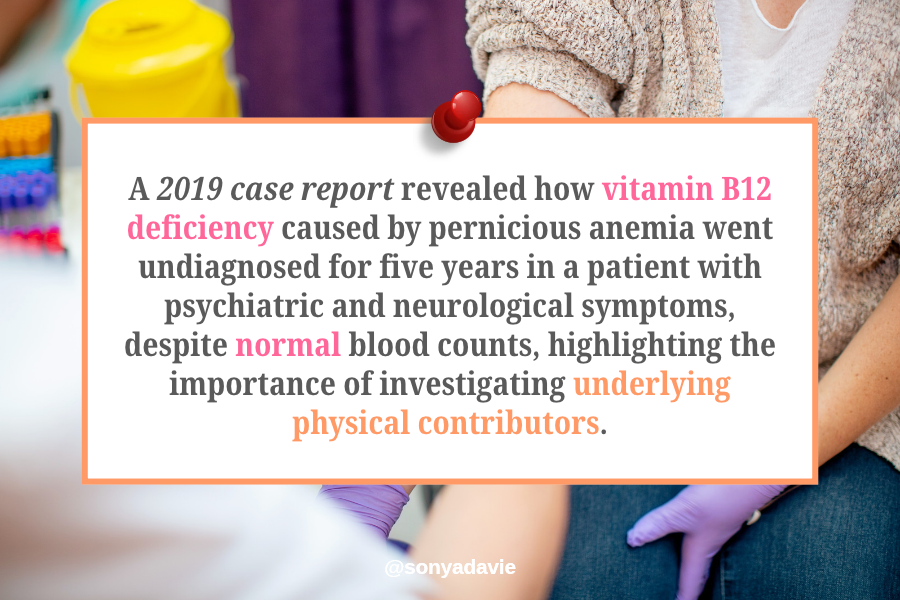
The patient’s red blood cell count, hemoglobin, and red blood cell size were all normal. Yet B12 was low, and homocysteine, a compound that can accumulate when B12 metabolism is impaired, was elevated.
An important distinction: treatment included B12 replacement and psychiatric medication, and the psychotic symptoms returned for a period after treatment began.
This case doesn’t prove that B12 cures paranoia. It highlights why investigating potential physical contributors to psychiatric symptoms matters.
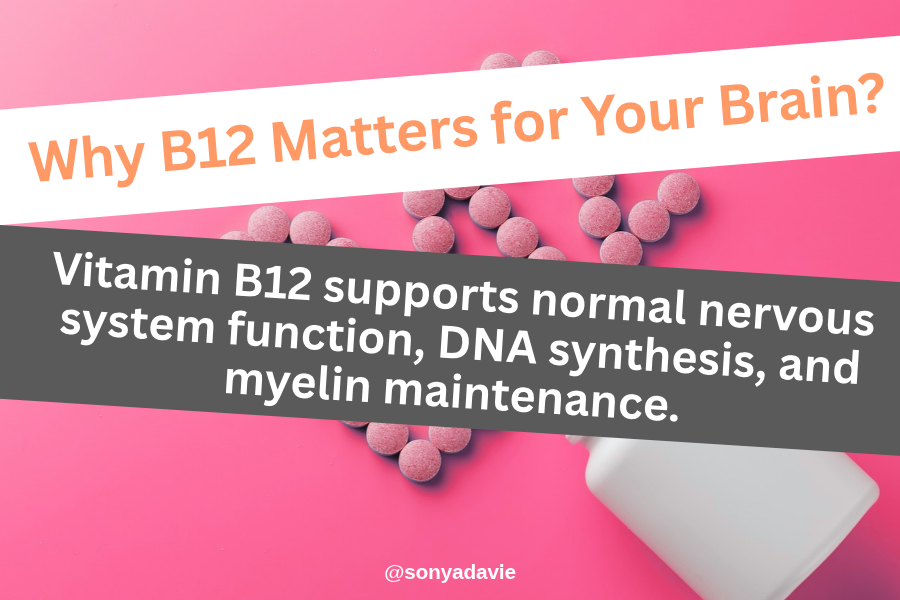
Why B12 Matters for Your Brain?
Vitamin B12 supports normal nervous system function, DNA synthesis, and the maintenance of myelin, the protective covering around nerve fibers.
When B12 is deficient, neurological and psychiatric symptoms can develop.
Researchers are still investigating the precise mechanisms, but several pathways may help explain the connection:
- Methylation. B12 powers methylation, a chemical process the body uses to build and regulate neurotransmitters (chemical messengers) like dopamine and serotonin. Dopamine imbalance is closely tied to paranoia and psychosis.
- Homocysteine. Without enough B12, homocysteine can’t be converted and builds up. Elevated homocysteine is linked to damage in blood vessels and nerve tissue, and to depression and cognitive decline.
- Myelin. B12 maintains myelin, the protective coating around nerve fibers. Low B12 can lead to demyelination (breakdown of that coating) and neuroinflammation (inflammation in the brain), both implicated in depression, anxiety, and psychosis.
Research has linked B12 deficiency with a range of symptoms, including depression, cognitive difficulties, confusion, and, in some cases, psychosis.
Why B12 Deficiency Gets Missed?
B12 deficiency doesn’t always show up as obvious anemia. Three factors can make it easy to overlook:
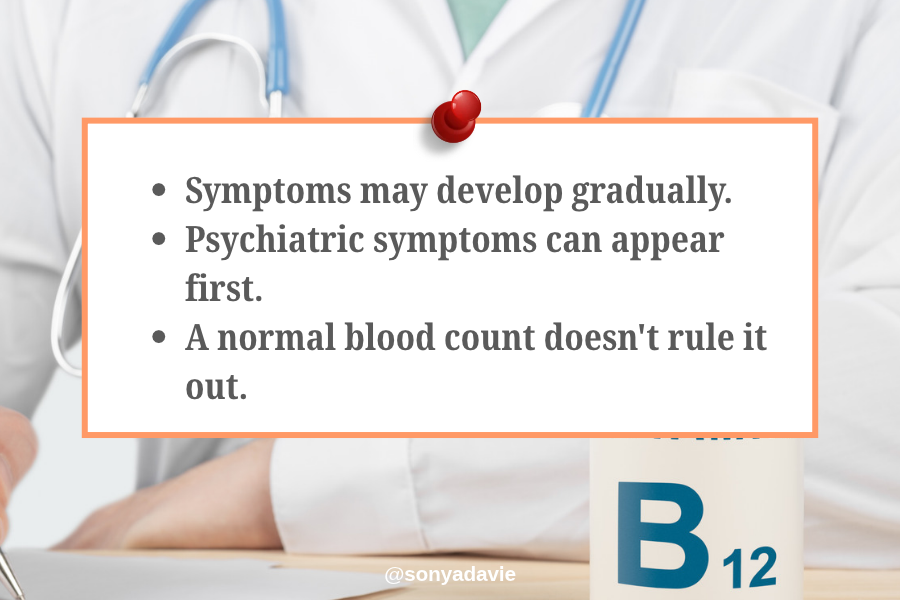
- It drains slowly. Your body stores 1,000 to 2,000 times as much B12 as you typically eat in a day, so symptoms can take several years to appear (NIH).
- Mental symptoms can come first. A 2003 review in L’Encéphale notes that psychiatric changes can appear months or even years before anemia, and can be the first or only sign.
- The usual red flag can be normal. Many clinicians watch for anemia (a low red blood cell count) as the sign of low B12. As the case above shows, someone can be deficient with a completely normal blood count.
Timing matters. The same 2003 review notes that how severe the symptoms get, and how well they respond to treatment, depends on how long they’ve been going on.
Who’s at Risk?
According to the NIH Office of Dietary Supplements, B12 deficiency affects between 3% and 43% of older adults. (Source)
The groups at higher risk include:
- Older adults, who often make less of the stomach acid needed to absorb B12 from food
- People with pernicious anemia, who can’t make intrinsic factor, the protein the body needs to absorb B12
- People with digestive conditions like celiac disease or Crohn’s disease
- People who’ve had weight loss surgery or other stomach surgery
- Vegetarians and vegans, since B12 occurs naturally only in animal foods
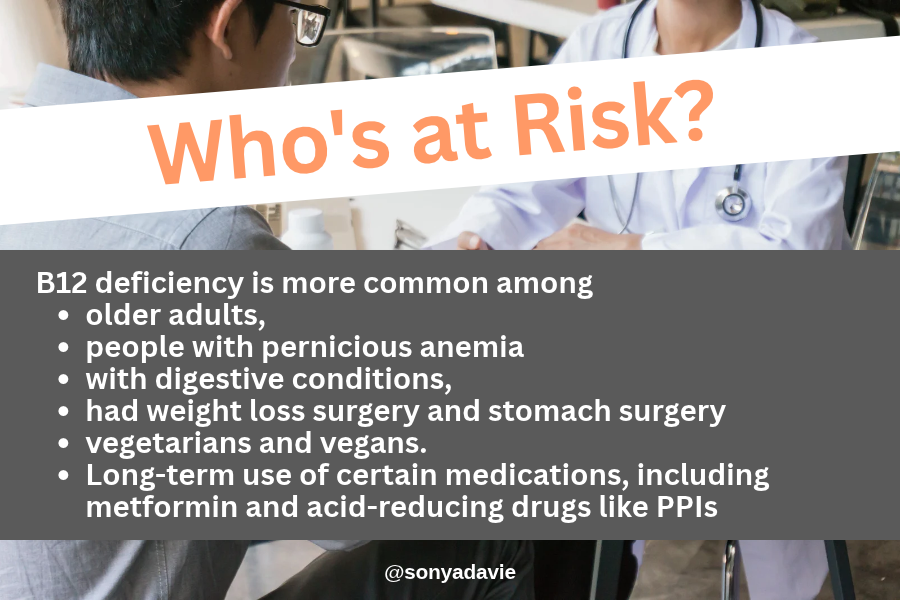
Two common prescriptions belong on this list too (worth discussing with your healthcare provider).
- PPIs (proton pump inhibitors), the acid reflux pills. A JAMA study compared 25,956 people with newly diagnosed B12 deficiency to 184,199 people without it. Two or more years on PPIs was linked to 65% higher odds of deficiency, and higher doses to nearly double the odds. The link weakened after people stopped the medication. (Source)
- Metformin, one of the most prescribed diabetes drugs. In the Diabetes Prevention Program Outcomes Study, the odds of B12 deficiency rose about 13% for every year of metformin use. A 2025 study found that taking metformin with a PPI raised the risk further than metformin alone. (Source)
These medications can be important and effective treatments. Don’t stop taking them on your own. Instead, ask your healthcare provider whether monitoring your B12 levels makes sense for you.
What to Ask Your Healthcare Provider?
If you’re experiencing unexplained changes in mood, memory, thinking, or behavior, especially if you have risk factors for B12 deficiency, consider discussing these tests with your provider:
- Serum B12: the standard blood level
- Homocysteine: a compound that builds up when your cells are short on B12
- Methylmalonic acid (MMA): another marker that rises when B12 is low, and the more specific of the two
Homocysteine and MMA can reflect deficiency at the tissue level, sometimes earlier than the standard test shows it.
A few questions to bring to your next appointment:
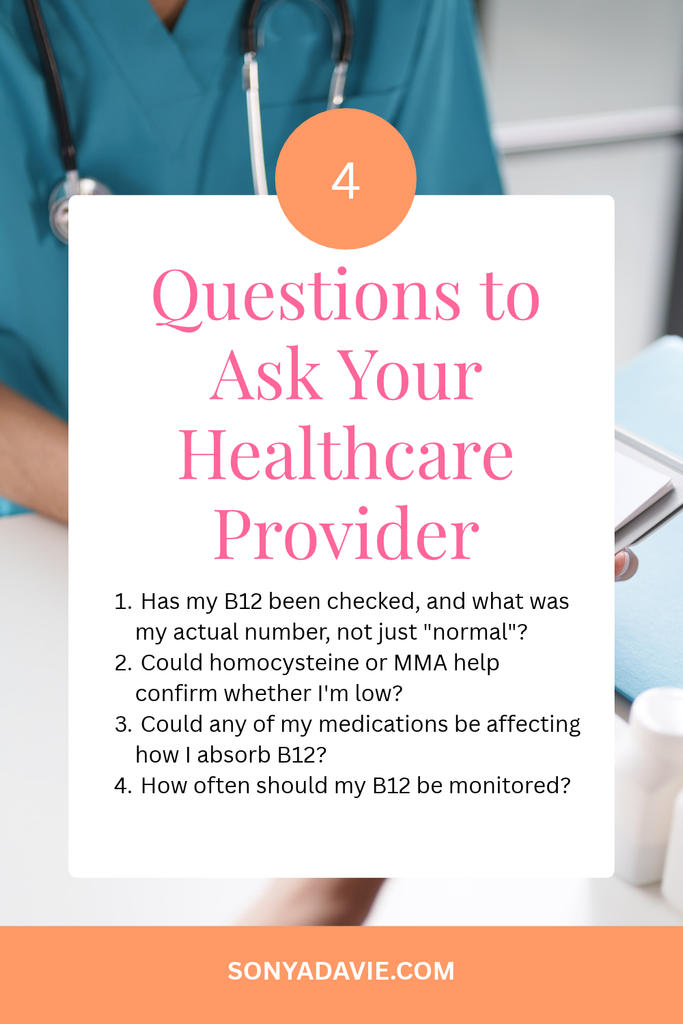
- Has my B12 been checked, and what was my actual number, not just “normal”?
- Could homocysteine or MMA help confirm whether I’m low?
- Could any of my medications be affecting how I absorb B12?
- How often should my B12 be monitored?
Before You Medicate, Investigate
From a Functional Psychiatry perspective, symptoms like paranoia, depression, and brain fog deserve a closer look. Sometimes, physical contributors can play a role in what you’re experiencing.
That doesn’t mean psychiatric care isn’t needed.
Medication can be helpful, life-changing, and even lifesaving for some people. It means we should also consider whether nutritional deficiencies, metabolic issues, hormonal changes, sleep problems, or other underlying factors may be contributing to symptoms.
Many clinicians already check B12. But in rushed appointments, a nutrient deficiency is easy to miss, especially when the bloodwork looks “normal.”
Notice who showed up on the risk list: people on long-term diabetes medication, people with digestive conditions, older adults.
Metabolic health, nutrition, and how your body absorbs what you eat are some of the most forgotten pieces of mental health care. That’s exactly what I’ll be focusing on in a new program launching this November. More on that soon.
The goal isn’t to choose between physical and mental healthcare. It’s to consider the whole person.
As a licensed psychotherapist and certified health coach, I’ve spent years educating people about the connections between mental wellness, nutrition, metabolic health, and the body.
And when nutrition is part of the conversation, supplement quality matters, too.
Choosing Supplements With More Confidence
If you and your healthcare provider determine that supplementation is appropriate, choosing a product can feel overwhelming.
Quality, ingredients, dosage, and manufacturing standards all deserve consideration.
That’s why I recommend Fullscript, a professional supplement platform that helps practitioners like me recommend quality products from participating brands in one convenient place.
Remember, not everyone needs supplements. The right choice depends on your individual needs, health history, medications, and healthcare provider’s guidance.
Your Next Step…
💛 Get my free guide: 7 Questions to Ask Your Doctor Before Starting a Psychiatric Medication.

Because your symptoms deserve attention, your questions deserve answers, and your health deserves a thoughtful approach.
All the best,
Sonya Davie, LMHC, INHC, CMHIMP
Licensed Psychotherapist, Certified Health Coach & Creator of Mental Wellness Lifestyle™
Disclaimer: This content is for educational purposes only and is not medical advice, diagnosis, or treatment. It does not replace an individualized evaluation by a qualified healthcare professional. Do not start, stop, or change medications or supplements without appropriate medical guidance.
References
Aroda, V. R., Edelstein, S. L., Goldberg, R. B., Knowler, W. C., Marcovina, S. M., Orchard, T. J., Bray, G. A., Schade, D. S., Temprosa, M. G., Watson, K. E., & Nathan, D. M. (2016). Long-term metformin use and vitamin B12 deficiency in the Diabetes Prevention Program Outcomes Study. The Journal of Clinical Endocrinology & Metabolism, 101(4), 1754–1761. https://pmc.ncbi.nlm.nih.gov/articles/PMC4880159/
Jung, et al. (2025). Concomitant use of metformin and proton pump inhibitors increases vitamin B12 deficiency risk in type 2 diabetes. Journal of Diabetes Investigation. https://doi.org/10.1111/jdi.70037
Lam, J. R., Schneider, J. L., Zhao, W., & Corley, D. A. (2013). Proton pump inhibitor and histamine 2 receptor antagonist use and vitamin B12 deficiency. JAMA, 310(22), 2435–2442. https://pubmed.ncbi.nlm.nih.gov/24327038/
National Institutes of Health, Office of Dietary Supplements. (n.d.). Vitamin B12: Fact sheet for consumers. https://ods.od.nih.gov/factsheets/VitaminB12-Consumer/
Psychiatric manifestations of vitamin B12 deficiency: A case report. (2003). L’Encéphale. https://pubmed.ncbi.nlm.nih.gov/15029091/
Reversible dementia, psychotic symptoms and epilepsy in a patient with vitamin B12 deficiency. (2019). BMJ Case Reports. https://pmc.ncbi.nlm.nih.gov/articles/PMC6536182/





+ show Comments
- Hide Comments
add a comment