


Sonya Davie, LMHC, INHC, CMHIMP
Licensed Psychotherapist, Certified Health Coach & Creator of Mental Wellness Lifestyle™
You’ve been tired for months.
You get headaches most afternoons. Your heart pounds when you lie down at night, your stomach is always in knots, and you can’t remember the last time you woke up feeling rested.
So you finally go to the doctor.
After a quick visit, you hear it: “It’s probably just stress.”
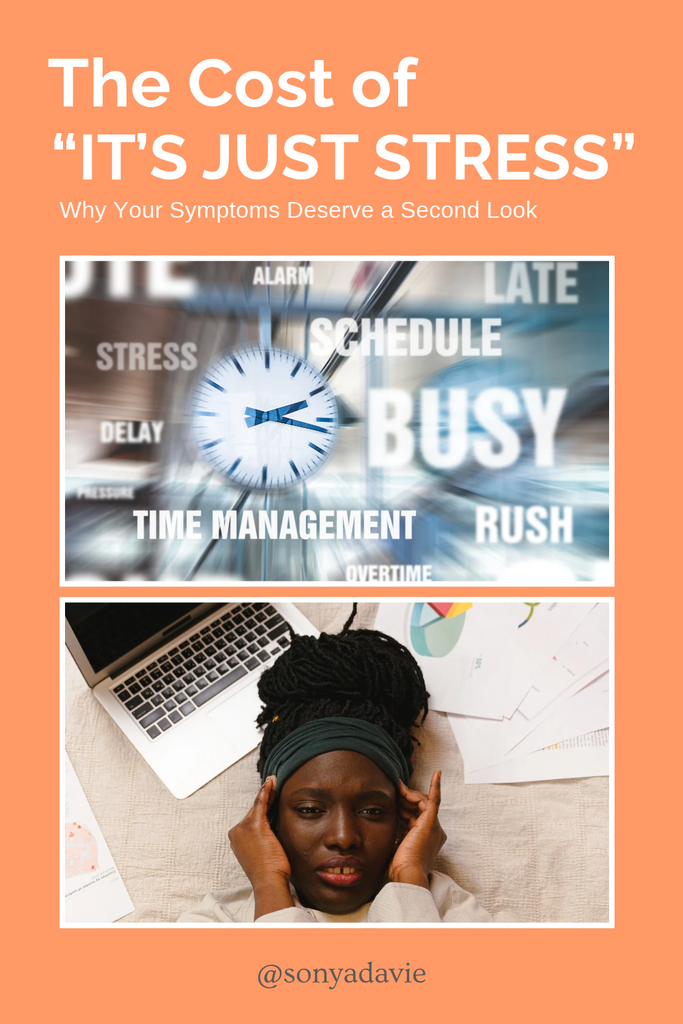
Or maybe you never made the appointment because you’ve already told yourself the same thing.
“It’s just stress” is one of the most common phrases in healthcare and everyday life.
Sometimes stress really is contributing to your symptoms. But when we treat it as the final answer instead of the starting point, we can miss what the body is trying to tell us.
Stress Is Real, and It Is Physical
I want to be clear about something: stress is not imaginary, and it is not a weakness.
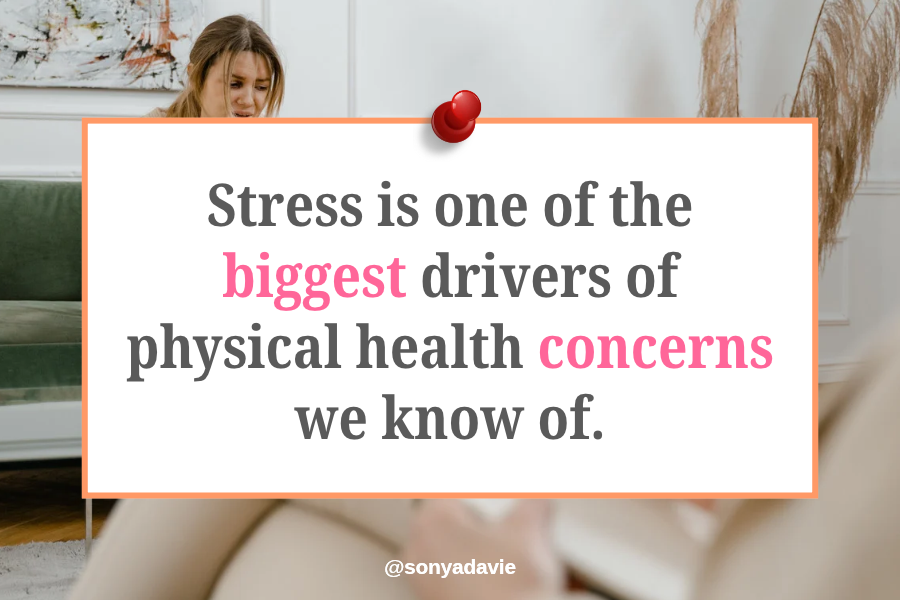
Stress is one of the biggest drivers of physical health concerns we know of. Stress is also one of the most common reasons people end up in a doctor’s office.
A widely cited estimate, first published in 2003 and still referenced today, suggests that 60–80% of primary care visits may have a stress-related component. (Source)
More recent research points the same way.
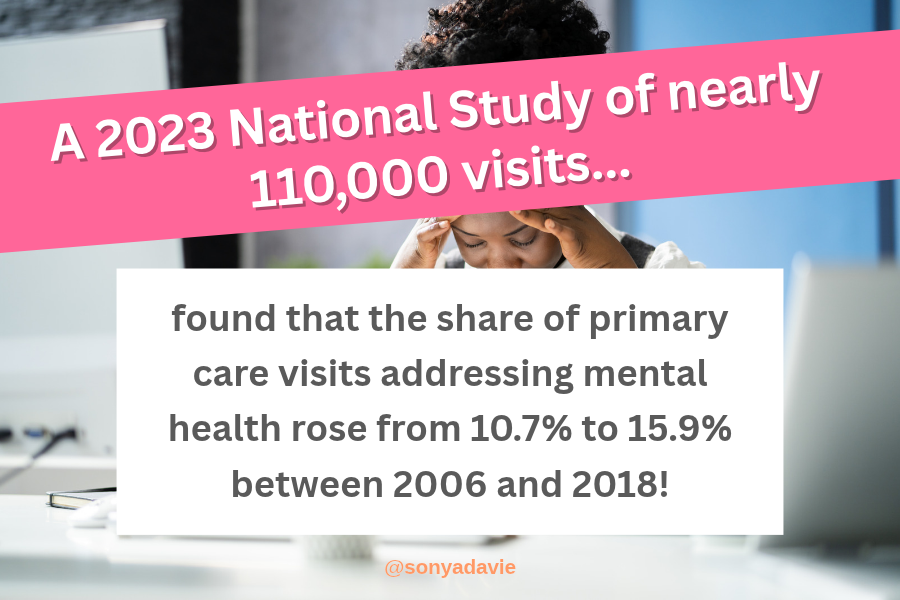
A 2023 national study of nearly 110,000 visits found that the share of primary care visits addressing mental health rose from 10.7% to 15.9% between 2006 and 2018, and anxiety and stress were the most common concerns, peaking at 38% of those visits. (Source)
Yet stress often goes unaddressed. When patients bring up stress and other psychosocial concerns, those concerns are less likely to be addressed than medical ones (63% vs. 88%).
In one large national study, only 3% of visits included any stress management counseling.
Think about that.
Stress may be affecting a person’s health, but the conversation about what to do next never happens.
People are told their symptoms are “just stress” and sent home without a plan to address the stress or a closer look at what else might be happening.
How Psychological Stress Becomes Biological Stress
This is the part I most want you to understand: psychological stress can become biological stress.
When your brain senses a threat, whether it’s a looming deadline, relationship conflict, financial worries, grief, or discrimination, it doesn’t simply create an uncomfortable feeling. It activates a series of physiological responses.

Your nervous system and stress hormones, including cortisol and adrenaline, prepare your body to respond. Your heart rate may increase, blood sugar can rise, digestion can slow, and immune activity can change.
This response (meant to be short-term) is designed to help you manage a challenge. The problem arises when stress continues without enough opportunity for recovery.
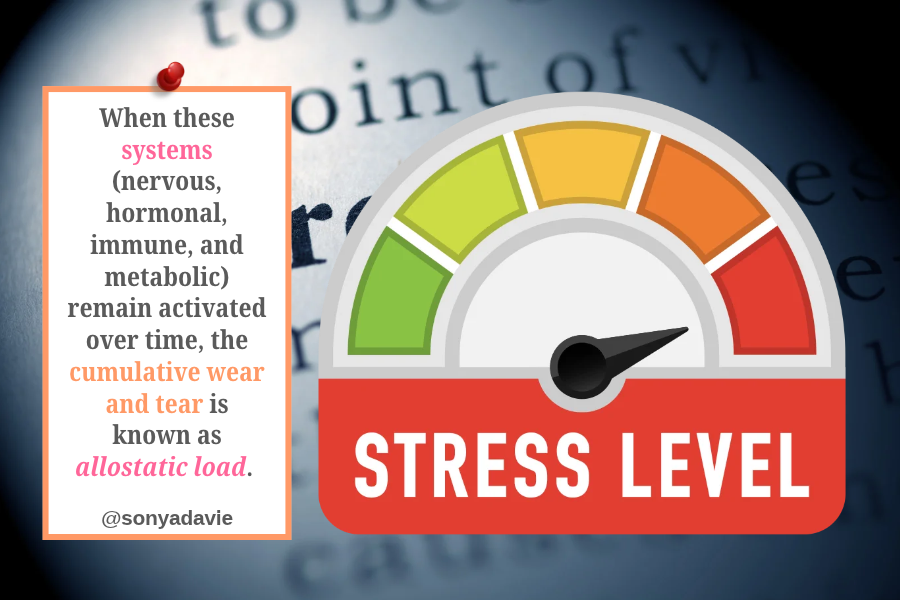
Stress researcher Dr. Bruce McEwen described the brain as a central organ of stress, coordinating responses through the nervous, hormonal, immune, and metabolic systems. When the stress response stays switched on and can’t fully turn off, it causes what scientists call allostatic load: the wear and tear from chronic overactivity of the body’s stress systems. (Source)
Over weeks, months, or years, that wear and tear adds up.
More than two decades of research show that allostatic load predicts outcomes including cardiovascular disease, functional decline, frailty, and early death.
- Clinically, it can look like sleep problems, irritability, trouble functioning, and feeling overwhelmed.
- If it continues, it can lead to physical or mental illness.
In plain language: when stress keeps going, your health can decline. Not because you’re weak, but because your body was never built to stay in emergency mode.
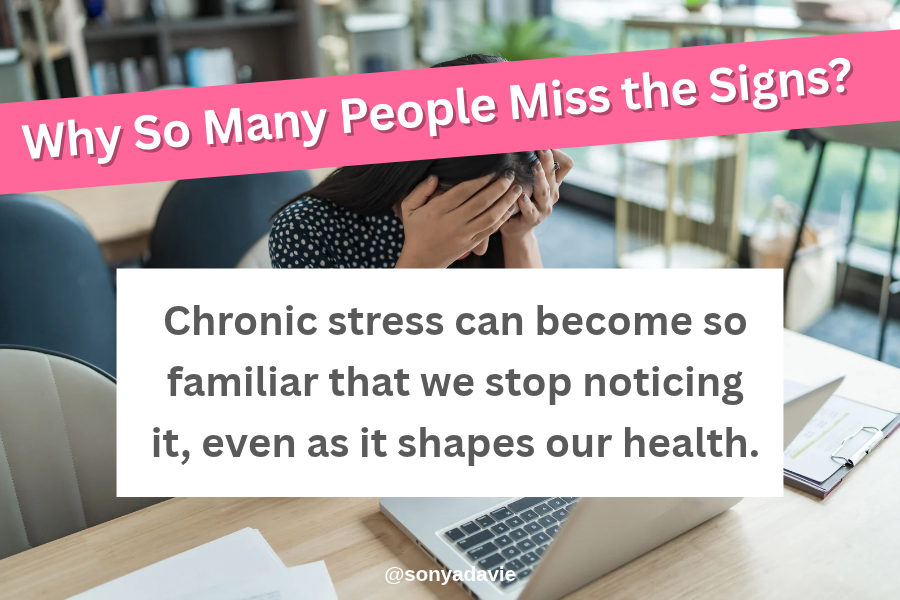
Why So Many People Miss the Signs?
I work with people every week who still can’t see how much stress is affecting them.
They come in because of sleep problems, changes in mood, or relationships that feel off. When we slow down and look closer, we may find jaw clenching, digestive issues, constant fatigue, tension headaches, or a heart that races at night.
When I gently ask, “How long has your body felt like this?” the answer is often years.
Many people say things like, “I’m fine. I’m just busy,” or “This is just how I am.”
When stress has been part of your life for so long, it can begin to feel normal.
You may stop noticing the signs even as they affect your health, relationships, and daily functioning.
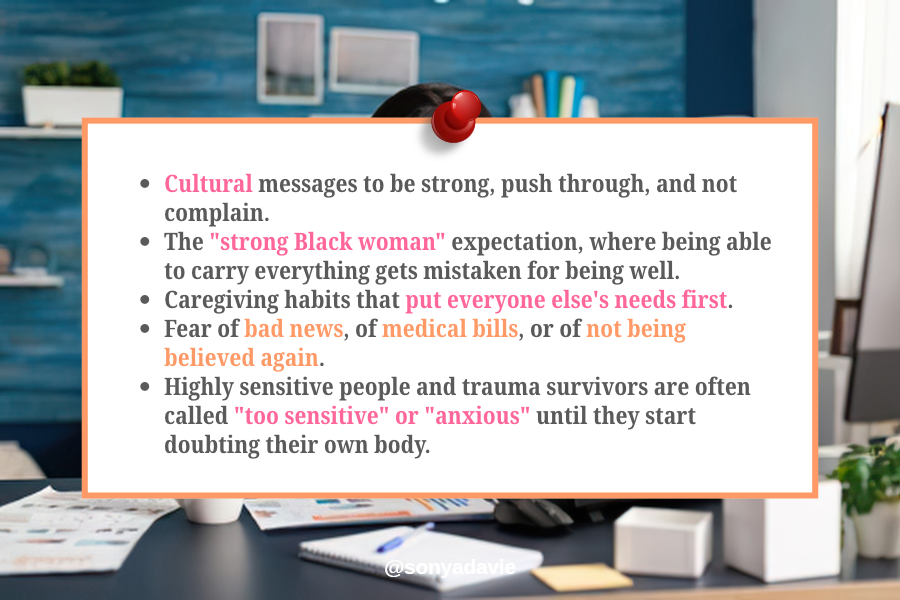
There are many reasons we overlook our own needs:
- Cultural expectations: Being strong, pushing through, and not complaining can make it difficult to acknowledge when something is wrong.
- The “strong Black woman” stereotype: Being able to carry everything can be mistaken for being well, even when the physical and emotional costs are high.
- Caregiving responsibilities: Putting everyone else’s needs first can leave little room to care for yourself.
- Fear and previous experiences: Worry about medical bills, receiving bad news, or not being believed can make it harder to seek care.
- Dismissal of emotional sensitivity: Highly sensitive people and trauma survivors may be labeled “too sensitive” or “anxious” until they begin doubting their own experiences.
Noticing what your body is telling you isn’t dramatic. It’s a form of self-respect.
When “Stress” Hides Something Else
There’s another side to this conversation. Stress can cause real physical symptoms, but it can also become a convenient explanation that prevents other conditions from being investigated.
Fatigue, headaches, digestive problems, and a racing heart can all occur during periods of stress. They can also have other causes.
For example:
- Fatigue and brain fog: Thyroid disorders, anemia, vitamin B12 deficiency, sleep apnea, and other conditions.
- Anxiety, a racing heart, or palpitations: Thyroid problems, heart rhythm disturbances, blood sugar fluctuations, and hormonal changes, including perimenopause.
- Stomach and digestive problems: Irritable bowel syndrome, celiac disease, inflammatory bowel disease, and other gastrointestinal conditions.
- Headaches, dizziness, or numbness: Migraine, blood pressure problems, medication effects, or neurological conditions.
- Changes in mood or energy: Hormonal changes, autoimmune conditions, medication side effects, sleep disorders, and other medical or psychiatric concerns.
Mental and physical health are interconnected. Medical conditions can contribute to symptoms that resemble anxiety or depression, while chronic stress can worsen existing health conditions.
Both can be true at the same time. Both deserve attention.
Who Gets Dismissed Most?
Not everyone’s symptoms are taken equally seriously.
A study of approximately 6.9 million people in Denmark found that women were diagnosed later than men for more than 700 diseases, with an average delay of about four years. For metabolic conditions such as diabetes, the gap was approximately 4.5 years. (Source)
Endometriosis can also take years to diagnose. One study estimated an average diagnostic delay of 6.6 years worldwide, leaving many women to navigate prolonged pain and uncertainty before receiving answers. (Source)
For Black women in the United States, the stakes can be especially high. In 2023, the maternal mortality rate for Black women was 50.3 deaths per 100,000 live births, compared with 14.5 for white women. (Source)
Public health researcher Dr. Arline Geronimus uses the term weathering to describe how prolonged exposure to social and economic adversity, including racism, can affect health over time.

For many Black women, being told “it’s just stress” can carry a double cost: the stress itself may be affecting their health, while dismissal can delay the care they need.
When your concerns are repeatedly brushed aside, you may begin to question your own judgment or feel that you have to prove something is wrong before anyone will listen.
This experience is sometimes described as medical gaslighting. Whatever term you use, feeling unheard can make it harder to trust the healthcare process and advocate for your needs.
The Real Costs of Brushing It Off
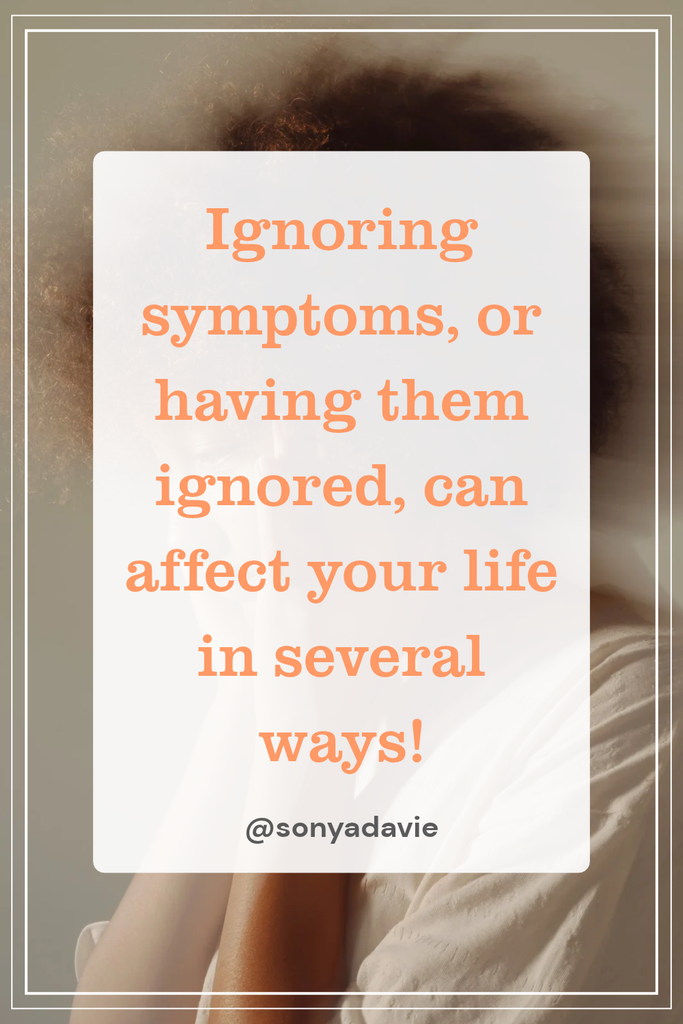
Ignoring symptoms, or having them ignored, can affect your life in several ways:
- Physical: Delayed diagnosis, worsening conditions, and missed opportunities for timely treatment.
- Emotional: Self-doubt, shame, frustration, and a growing loss of trust in your body.
- Practical: Missed work, strain on relationships, additional appointments, and money spent trying solutions that don’t address the underlying problem.
It can also create a frustrating cycle. Being dismissed adds stress. That stress may intensify your symptoms.
The symptoms lead to more appointments, and those appointments may bring more frustration if your concerns remain unaddressed.
Breaking that cycle starts with taking your body seriously, even when other people don’t.
Learning to Listen to Your Body
You don’t have to begin with a complicated routine. Start with a short daily check-in.
Sit or lie down, take three slow breaths, and gently scan your body from head to toe.
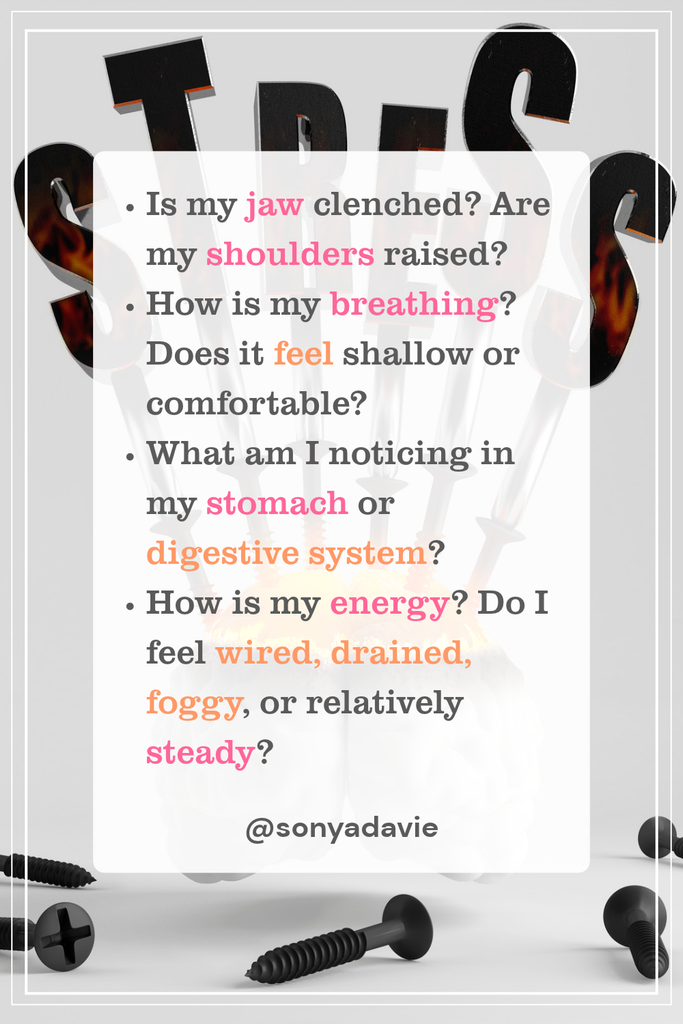
Ask yourself:
- Is my jaw clenched? Are my shoulders raised?
- How is my breathing? Does it feel shallow or comfortable?
- What am I noticing in my stomach or digestive system?
- How is my energy? Do I feel wired, drained, foggy, or relatively steady?
You’re not trying to fix anything yet. You’re simply noticing patterns.
When Should You Seek Medical Attention?
Make an appointment with a healthcare provider when a symptom:
- Is new or feels different from your usual pattern.
- Lasts more than two weeks or keeps returning.
- Is getting worse.
- Interferes with sleep, work, relationships, or everyday activities.
- Persists even when your stress levels improve.
That last point is especially important.
If you’ve taken steps to reduce your stress and a symptom is still present, it deserves a closer look.
Don’t wait two weeks if a symptom is severe, rapidly worsening, or otherwise concerning.
Seek emergency care for symptoms such as chest pain or pressure, difficulty breathing, sudden weakness or numbness, sudden confusion, fainting, or a sudden, unusually severe headache.
If you’re experiencing thoughts of suicide or self-harm, seek immediate support. In the United States, you can call or text 988 for crisis support.
How to Advocate for Yourself
You deserve to be heard. Here are five practical ways to prepare for a medical appointment and communicate your concerns.
1. Track your symptoms.
Write down what happens, when it happens, how long it lasts, what else you’re experiencing, and what seems to make it better or worse. Note your stress levels, sleep, medications, and any other relevant patterns.
Specific observations can help your provider understand what you’re experiencing.

2. Bring questions.
You might ask:
- “What else could be causing these symptoms besides stress?”
- “Are there medical conditions we should consider?”
- “What tests, if any, would be appropriate to investigate possible causes?”
3. Ask about the reasoning behind decisions.
If your provider doesn’t recommend a test you requested, ask why and what the next steps should be. You can also ask for the reasoning to be documented in your medical record.
4. Bring support.
A trusted friend or family member can help you take notes, remember recommendations, and speak up if you’re feeling overwhelmed.
5. Consider a second opinion.
You’re allowed to seek another perspective, especially if your symptoms persist and you don’t feel your concerns have been adequately addressed. Look for a provider who listens, explains their reasoning, and respects your experiences and background.
Here are a few phrases you can use word for word:
- “I understand stress may be contributing to this. I’d still like to explore other possible causes.”
- “This isn’t normal for my body. It started on [date] and hasn’t improved.”
- “I don’t feel my concern has been fully addressed. What are our next steps?”
It’s Not Either/Or!
You don’t have to choose between “it’s stress” and “it’s medical.” Sometimes the answer is both.
You can investigate possible medical causes while also supporting your nervous system through consistent sleep, nourishing food, gentle movement, breathing practices, meaningful connection, and therapy when appropriate.
This is the foundation of integrative care: looking at the whole person rather than focusing on one symptom or one part of the picture.
Reducing stress matters. So does understanding why your symptoms are happening in the first place.
Your Body Is Speaking…
Stress may be part of your story, but you deserve the full story.
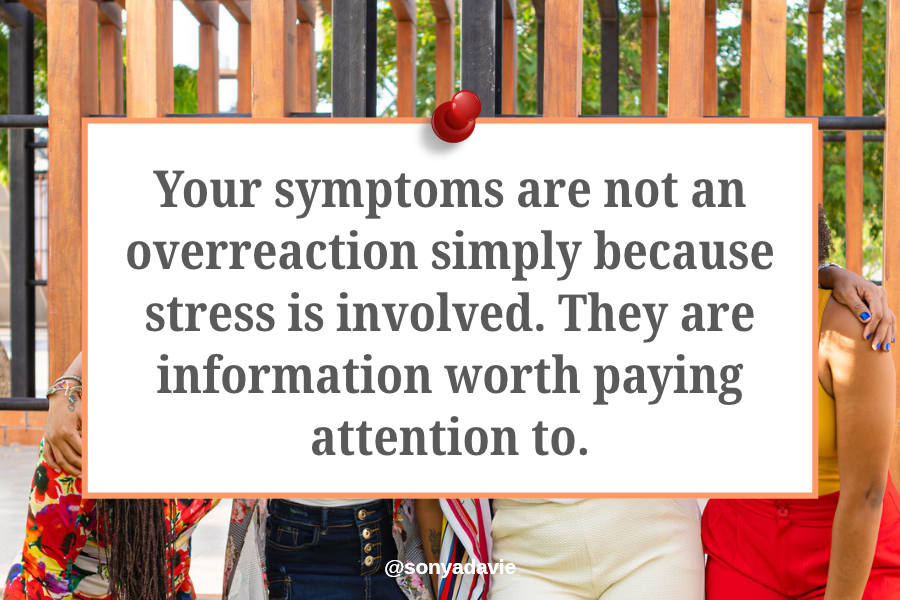
When you notice patterns, track what’s happening, and speak up about your concerns, you’re taking an active role in protecting your health.
You are allowed to take up space in the exam room. You are allowed to ask, “What else could this be?”
Start by noticing. Get curious. Ask questions.
Ready to Help Your Body Recover?
If this post feels familiar and you’re beginning to recognize how long your body has been running on stress, you don’t have to figure out the next steps alone.
My Stress Recovery Toolkit is a self-paced, trauma-informed mini-course designed to help you recognize your stress patterns and practice simple, body-based techniques that support nervous system regulation and recovery.
It’s practical, approachable, and designed for real life, especially when you’re already carrying a lot.
Disclaimer: This post is for educational purposes only and is not medical advice, diagnosis, or treatment. Please consult a qualified healthcare provider about your symptoms. Do not start, stop, or change prescribed medication without discussing it with your prescriber.
References
American College of Obstetricians and Gynecologists. (n.d.). Endometriosis. https://www.acog.org/womens-health/faqs/endometriosis
Avey, H., Matheny, K. B., Robbins, A., & Jacobson, T. A. (2003). Health care providers’ training, perceptions, and practices regarding stress and health outcomes. Journal of the National Medical Association, 95(9), 833–845.
Centers for Disease Control and Prevention, National Center for Health Statistics. (2025). Maternal mortality rates in the United States, 2023. https://www.cdc.gov/nchs/data/hestat/maternal-mortality/2023/maternal-mortality-rates-2023.htm
Fryer, J., Mason-Jones, A. J., & Woodward, A. (2025). Understanding diagnostic delay for endometriosis: A scoping review using the social-ecological framework. Health Care for Women International, 46(3), 335–351. https://doi.org/10.1080/07399332.2024.2413056
Geronimus, A. T., Hicken, M., Keene, D., & Bound, J. (2006). “Weathering” and age patterns of allostatic load scores among Blacks and Whites in the United States. American Journal of Public Health, 96(5), 826–833. https://doi.org/10.2105/AJPH.2004.060749
McEwen, B. S. (1998). Stress, adaptation, and disease: Allostasis and allostatic load. Annals of the New York Academy of Sciences, 840(1), 33–44. https://doi.org/10.1111/j.1749-6632.1998.tb09546.x
McEwen, B. S. (1998). Protective and damaging effects of stress mediators. The New England Journal of Medicine, 338(3), 171–179. https://doi.org/10.1056/NEJM199801153380307
Nerurkar, A., Bitton, A., Davis, R. B., Phillips, R. S., & Yeh, G. (2013). When physicians counsel about stress: Results of a national study. JAMA Internal Medicine, 173(1), 76–77. https://doi.org/10.1001/2013.jamainternmed.480
Parker, H. W., Abreu, A. M., Sullivan, M. C., & Vadiveloo, M. K. (2022). Allostatic load and mortality: A systematic review and meta-analysis. American Journal of Preventive Medicine, 63(1), 131–140. https://doi.org/10.1016/j.amepre.2022.02.003
Westergaard, D., Moseley, P., Sørup, F. K. H., Baldi, P., & Brunak, S. (2019). Population-wide analysis of differences in disease progression patterns in men and women. Nature Communications, 10, Article 666. https://doi.org/10.1038/s41467-019-08475-9





+ show Comments
- Hide Comments
add a comment